

News
The difference and connection between mud solids control system and waste slurry treatment
Time:
2025-08-07
The Difference and Connection Between Mud Solids Control Systems and Waste Slurry Treatment
On engineering sites such as oil drilling, trenchless construction, and mining exploration, mud treatment is a critical step in ensuring operational safety and environmental compliance. However, many people still have a vague understanding of 'mud solids control systems' and 'waste slurry treatment systems,' even conflating the two.
In reality, these two systems are fundamentally different, yet they complement and synergize each other in practical engineering.
This article will provide an in-depth understanding of the definitions, functions, key differences, and practical connections between mud solids control and waste slurry treatment, helping companies make more informed equipment selection and system deployment decisions.
1. What is a Mud Solids Control System?
A mud solids control system (SCS) refers to a complete set of equipment used to treat solid particles in drilling fluid in real time, purify the mud, and enable recycling. The main objectives are:
Removing solid impurities such as cuttings, sand, and gravel from the drilling fluid;
Maintaining stable mud properties and improving drilling efficiency;
Reducing drilling fluid consumption and saving construction costs.
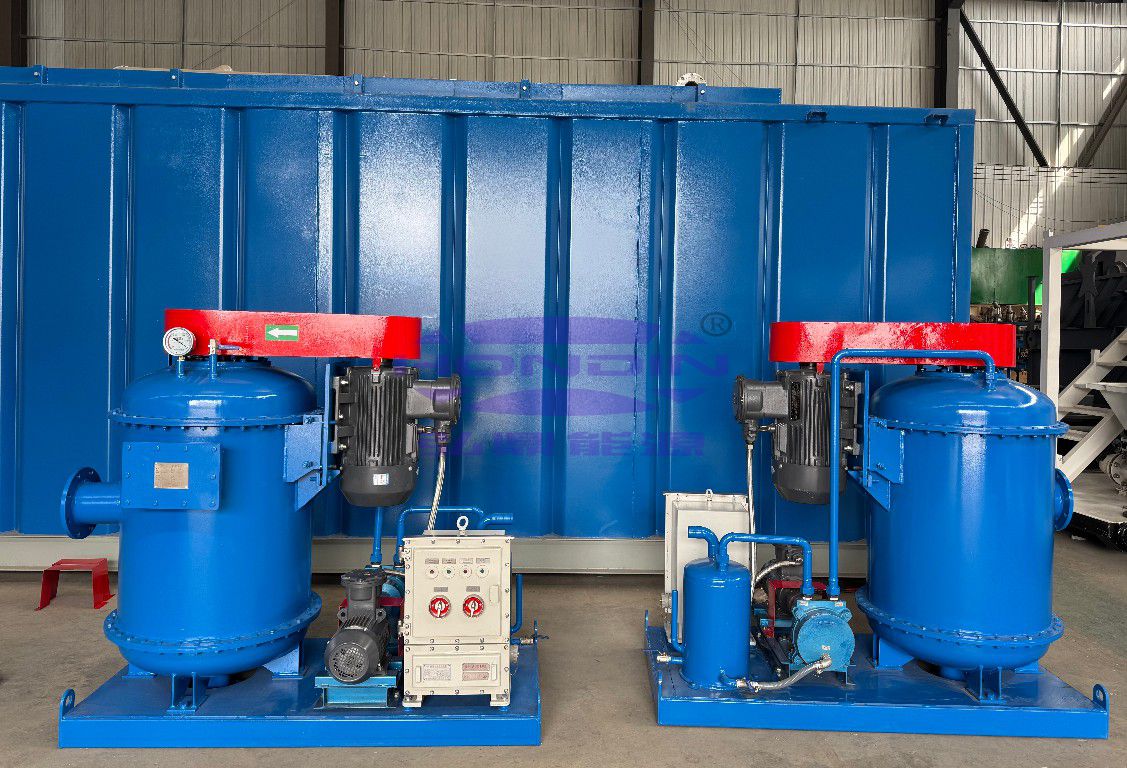
The main equipment in the solids control system includes:
Mud shaker (removes coarse particles);
Desander and desilter (processes medium and fine particles);
Centrifuge (recovers fine solids);
Vacuum degasser, agitator, mud tank, and other auxiliary equipment.
Simply put, mud solids control is 'purifying during use,' allowing the mud to be recycled and reused, eliminating waste.
II. What is a waste slurry treatment system?
Waste slurry treatment systems are used to treat waste slurry that is no longer reusable and requires final disposal. Their goals are:
Separating solids and water from the waste slurry
Achieving drying and volume reduction to facilitate subsequent transportation, landfill, or resource recovery
Meeting environmental compliance requirements and preventing soil and water contamination
Common waste slurry treatment equipment includes:
Mud-water separation systems
Plate and frame filter presses, belt filter presses, centrifugal dewatering units
Chemical flocculation units
Wastewater storage tanks and mixing systems
Simply put, waste slurry treatment is the 'last hurdle,' handling unusable slurry or residues. 3. The Connection Between the Two: Not a Replacement, but a Synergy
Although mud solids control and waste slurry treatment systems perform different tasks, in actual engineering, they are not mutually exclusive, but rather two stages within an integrated mud management system:
Front-end: Mud solids control system - Purifies slurry during use to reduce waste slurry
Back-end: Waste slurry treatment system - Final disposal of unusable slurry to achieve environmental compliance
Particularly in large-scale projects or areas with strict environmental regulations, solids control and waste slurry systems are often deployed in tandem. For example:
Drilling platforms: The solids control system is used for long-term operation cycles, while the waste slurry system handles replacement/contaminated mud
Trenchless projects: The solids control system is used to circulate mud, and the remaining waste slurry is centrally treated after construction is complete
Shield tunneling: When waste slurry volumes are large, waste slurry treatment equipment is directly deployed to handle them
Conclusion: Scientific selection, efficient coordination
With increasingly stringent environmental requirements and increasingly sophisticated engineering projects, mud treatment is no longer simply a matter of 'disposal' but a systematic project that addresses cost, efficiency, safety, and compliance. Mud solids control systems are key to 'source control and process optimization.' Waste slurry treatment systems ensure 'end-of-pipe treatment and a green finish.' When selecting and deploying equipment, companies should consider project characteristics, site requirements, and environmental standards to develop an integrated solution for the entire mud process. This will truly achieve cost reduction, efficiency improvement, and green construction.
If you are interested in our mud solids control equipment or customized solutions, please contact us for product information, project examples, or technical consultation.
Click:








文章推荐
Hot News
-

Chemical Hot Washing for Oily Sludge: Process Stages and System Evaluation
-
The Role of Mud Cleaners in Weighted Drilling Fluid Solids Control
-
Waterflooding and Scale Control in Mature Oilfields
-
Gas Flotation in Produced Water Treatment Systems
-
Mud Agitator Role and Selection for Solids Control
-
Surface Fluid Systems for Acidizing Operations
-
Vertical Cuttings Dryer for Drilling Waste Management
-
Desander vs Desilter Selection for Solids Control
-
Surface Blending and Pumping Systems for Well Stimulation
-
Produced Water Pretreatment for Reinjection and Reuse
-
Vacuum Degasser Role in Drilling Fluid Solids Control
-
Decanter Centrifuge for Oily Sludge Dewatering



Add: No.462 Jinggao South Road, Gaoling District, Xi'an, Shaanxi Province, China
Mob/WhatsApp: +86 186 2931 2932/ +86 187 2900 8271
E-mail: sales@hondinchina.com

Follow us:

点击右上角
分享给朋友吧
点击右上角
分享给朋友吧
Copyright © Xi'an Hondin Energy Technology Co., Ltd. All rights reserved
Copyright © Xi'an Hondin Energy Technology Co., Ltd. All rights reserved