

News
What is a Mud Solids Control System? Understanding its Principles and Applications in One Article
Time:
2025-08-06
In oil drilling, trenchless construction, geological exploration, and other projects, drilling fluid (commonly known as mud) is called the 'blood of drilling.' The circulation, purification, and efficient utilization of this 'blood' rely heavily on a core equipment system: the mud solids control system.
This article will provide a comprehensive understanding of the definition, operating principles, core equipment components, and practical application value of a mud solids control system.
1. What is a Mud Solids Control System?
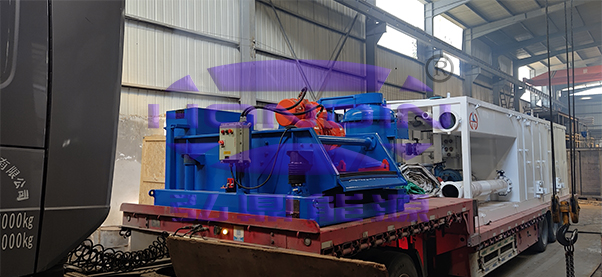
A mud solids control system (SCS) is a complete set of equipment used to treat solid impurities such as cuttings and sand in drilling fluid. Its core goal is to separate harmful solid particles from the drilling fluid, retaining useful components and enabling the recycling of the drilling fluid.
It is widely used in:
• Oil and gas drilling
• Water well drilling
• Trenchless drilling (such as pipe jacking and horizontal directional drilling)
• Mining exploration
• Geothermal energy development, and other fields
2. How a Mud Solids Control System Works
During the drilling process, mud carries large amounts of formation cuttings and returns to the surface from the bottom of the well. If mud is reused without treatment, it will not only increase equipment wear and reduce drilling efficiency, but may also cause serious accidents such as well collapse and stuck drill bits.
Mud solids control systems are designed to grade and treat this 'dirty' mud. The basic process is as follows:
1. Drilling fluid returns from the wellhead to the shale shaker.
2. Solids of varying particle sizes are sequentially screened through multiple stages of equipment.
3. The treated 'clean' mud is returned to the mud tank for reuse in drilling.
III. Main Equipment Components of a Mud Solids Control System
A standard solids control system generally includes the following equipment, listed in descending order of particle size:
Equipment Name Function Description
Shale shaker: Primary screening of large rock cuttings (>74μm).
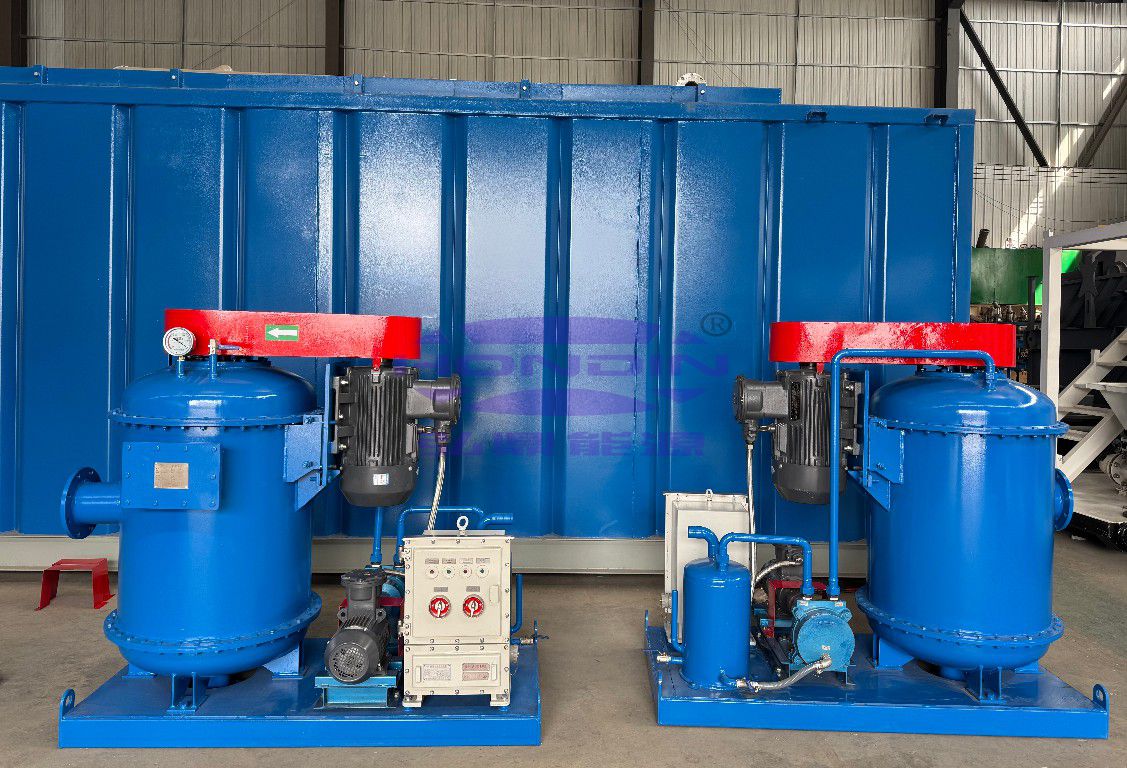
Vacuum degasser: Removes harmful gases from the drilling fluid to prevent gas intrusion.
Desander: Separates larger sand and gravel particles (45-74μm).
Desilter: Separates fine silt and sand particles (15-45μm).
Centrifuge: Further recovers fine solids particles (2-15μm).
Mud tank/mixer: Stores, mixes, and blends treated drilling fluid.
Each device is an integral part of the system, working together to achieve graded purification from coarse to fine particles.
IV.

The Role and Value of Mud Solids Control Systems
1. Improve Drilling Efficiency
Effectively control mud properties, increase drilling speed, and reduce accident rates.
2. Reduce Operating Costs
Recycle drilling fluid, reducing new mud preparation and disposal costs.
3. Protect the Environment and Comply with Discharge Regulations
Reduce waste slurry emissions to meet increasingly stringent environmental requirements.
4. Extend Equipment Life
Reduce damage to pumps, drill bits, and other equipment caused by solid particle abrasion.
5. Meet Various Operating Requirements
Solids control systems can be flexibly customized based on well depth, formation type, and construction process.
Conclusion
Mud solids control systems are an indispensable component of modern drilling operations, directly impacting operational efficiency, cost control, and environmental protection. Choosing a high-performance, customized, and stable solids control system has become a common consensus among industry customers.
Our company has over ten years of experience in the research and development of mud treatment and solids control equipment, supporting customized solutions for a variety of application scenarios. If you have any related needs, please feel free to contact us for more information on our products and services.








Hot News
-

Chemical Hot Washing for Oily Sludge: Process Stages and System Evaluation
-
The Role of Mud Cleaners in Weighted Drilling Fluid Solids Control
-
Waterflooding and Scale Control in Mature Oilfields
-
Gas Flotation in Produced Water Treatment Systems
-
Mud Agitator Role and Selection for Solids Control
-
Surface Fluid Systems for Acidizing Operations
-
Vertical Cuttings Dryer for Drilling Waste Management
-
Desander vs Desilter Selection for Solids Control
-
Surface Blending and Pumping Systems for Well Stimulation
-
Produced Water Pretreatment for Reinjection and Reuse
-
Vacuum Degasser Role in Drilling Fluid Solids Control
-
Decanter Centrifuge for Oily Sludge Dewatering



Add: No.462 Jinggao South Road, Gaoling District, Xi'an, Shaanxi Province, China
Mob/WhatsApp: +86 186 2931 2932/ +86 187 2900 8271
E-mail: sales@hondinchina.com

Follow us:

点击右上角
分享给朋友吧
点击右上角
分享给朋友吧
Copyright © Xi'an Hondin Energy Technology Co., Ltd. All rights reserved
Copyright © Xi'an Hondin Energy Technology Co., Ltd. All rights reserved