

News
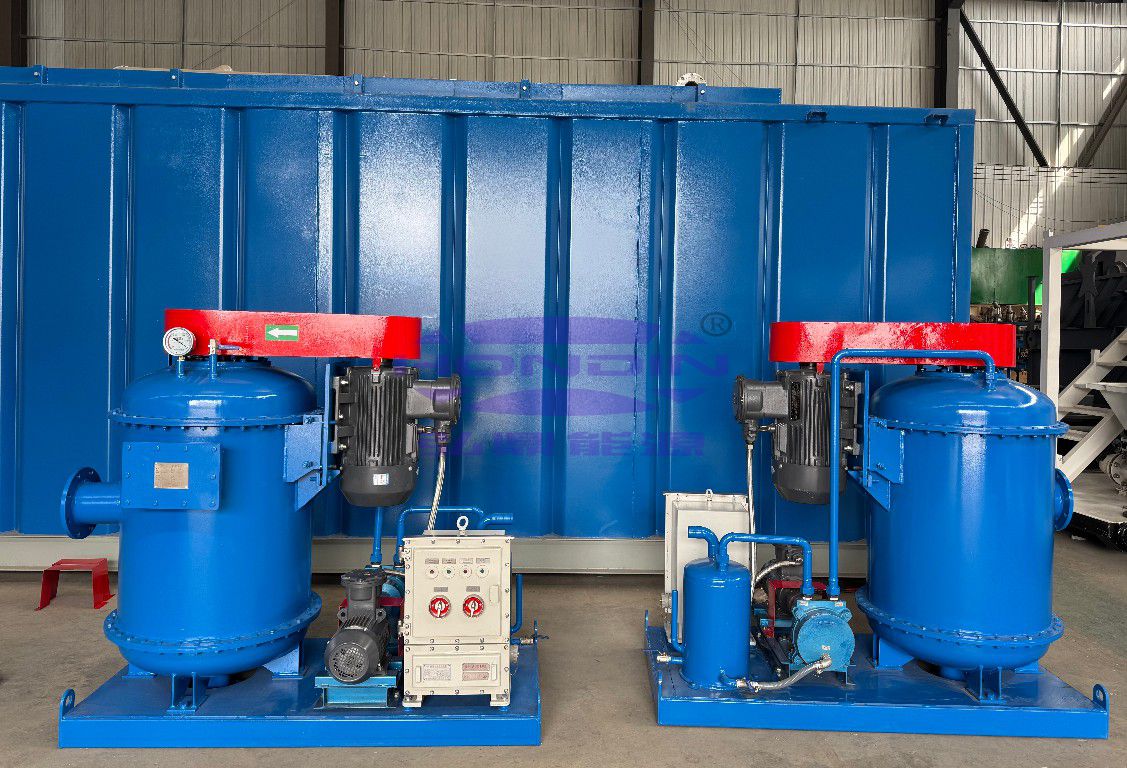
Vertical Cuttings Dryer for Drilling Waste Management
Time:
2026-08-19
When drilled cuttings leave the shale shaker, they usually retain some drilling fluid on their surfaces. With oil-based or synthetic-based mud, this retained liquid represents potentially recoverable drilling fluid and can also increase the weight, volume, and handling burden of the drilling-waste stream. A vertical cuttings dryer is used before storage, transport, or further treatment to mechanically recover part of the liquid carried with the cuttings.
U.S. EPA drilling-fluid documentation describes a cuttings dryer as equipment intended to treat cuttings and notes that improved solids-control systems may use vertical or horizontal centrifuges to recover more drilling fluid from the cuttings stream. “Drying” in this context does not mean thermal drying and should not be confused with a thermal desorption unit. The primary mechanism is mechanical centrifugal separation combined with solids conveying and liquid recovery.

How a Cuttings Dryer Works
Cuttings enter a rotating chamber where centrifugal force separates liquid from the surfaces and voids around solid particles. A conveying mechanism moves the solids toward the discharge while recovered drilling fluid leaves through a liquid outlet and is routed to a collection or reuse system. Rotor speed, differential speed, feed condition, particle size, and mud viscosity influence liquid recovery, discharge quality, and equipment loading.
The objective is not to remove every trace of liquid. The practical target is a balance between throughput, liquid recovery, stable solids discharge, wear, and energy use. Cuttings properties change between hole sections and mud systems, so operating parameters should be confirmed through samples, field data, and the treatment objective.
Typical System Arrangement
Front-end screening and cuttings transfer
The shale shaker first performs primary separation between drilling fluid and larger cuttings. A chute, screw conveyor, or other transfer system then feeds the cuttings dryer. Oversized debris, metal objects, and tool fragments should be kept out of the equipment because they can cause plugging, impact damage, or accelerated wear.
Mechanical drying and liquid recovery
The dryer continuously separates liquid from the cuttings. Recovered drilling fluid can be routed to a suitable mud tank or liquid-treatment unit. Whether the recovered liquid needs additional screening, desanding, or centrifugation depends on its solids content, mud properties, and reuse requirement. Recovered liquid should not automatically be returned to the active mud system without checking its condition.
Downstream solids management
The treated cuttings may proceed to temporary storage, solidification, thermal treatment, transport, or another approved route. Where residual oil content or other controls require additional treatment, mechanical drying can serve as pretreatment before thermal desorption or another process. NOV public material describes thermal desorption for oil-based mud cuttings and recovery of oil, water, and solids. Thermal desorption and mechanical cuttings drying have different purposes, energy requirements, and process boundaries and should be evaluated separately.
What to Check Before Selection
First, confirm the cuttings source and mud system. Water-based, oil-based, and synthetic-based drilling fluids create different adhesion, viscosity, and recovery conditions.
Second, characterize particle size and solids loading. Hole size, formation, bit type, rate of penetration, and shaker operation all affect the feed presented to the dryer.
Third, define the destination of each stream. The reuse route for recovered liquid, temporary storage and transport of solids, and the possible need for thermal or other environmental treatment should be established during process design.

Fourth, review wear and maintenance. Cuttings may contain sand, hard rock fragments, and metal debris. The bowl, conveying flights, discharge, seals, and bearings need suitable wear protection and service access. Vibration, torque, temperature, feed stability, and abnormal noise should be monitored during operation.
Fifth, confirm site safety and auxiliaries. Oily cuttings may involve flammable vapor, oil exposure, wash fluids, and waste-liquid handling. Electrical classification, guarding, ventilation, and discharge arrangements should follow the project risk assessment and applicable requirements.
Conclusion
A vertical cuttings dryer is an important link between drilling-fluid recovery and drilling-waste management. Front-end debris control, continuous mechanical liquid removal, liquid recovery, and classified solids handling can reduce wet-waste loading and improve material control at the rig site. Actual results depend on cuttings samples, mud system, equipment arrangement, and downstream route. Sample testing and process verification before mobilization are recommended.








Hot News
-

Chemical Hot Washing for Oily Sludge: Process Stages and System Evaluation
-
The Role of Mud Cleaners in Weighted Drilling Fluid Solids Control
-
Waterflooding and Scale Control in Mature Oilfields
-
Gas Flotation in Produced Water Treatment Systems
-
Mud Agitator Role and Selection for Solids Control
-
Surface Fluid Systems for Acidizing Operations
-
Vertical Cuttings Dryer for Drilling Waste Management
-
Desander vs Desilter Selection for Solids Control
-
Surface Blending and Pumping Systems for Well Stimulation
-
Produced Water Pretreatment for Reinjection and Reuse
-
Vacuum Degasser Role in Drilling Fluid Solids Control
-
Decanter Centrifuge for Oily Sludge Dewatering



Add: No.462 Jinggao South Road, Gaoling District, Xi'an, Shaanxi Province, China
Mob/WhatsApp: +86 186 2931 2932/ +86 187 2900 8271
E-mail: sales@hondinchina.com

Follow us:

点击右上角
分享给朋友吧
点击右上角
分享给朋友吧
Copyright © Xi'an Hondin Energy Technology Co., Ltd. All rights reserved
Copyright © Xi'an Hondin Energy Technology Co., Ltd. All rights reserved