

Products


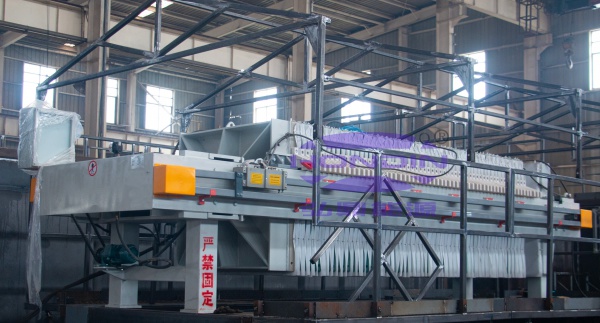
Filter Press
A belt filter press is a continuous solid-liquid separation device. Its core technology relies on a multi-stage synergistic process of gravity dewatering, wedge-zone pre-compression dewatering, and high-pressure dewatering with press rollers to concentrate and dewater solid particles in the slurry, ultimately producing a filter cake with low moisture content. It is widely used in coal preparation and various industrial fields.
I. Product Introduction
A belt filter press is a continuous solid-liquid separation device. Its core technology relies on a multi-stage synergistic process of gravity dewatering, wedge-zone pre-compression dewatering, and high-pressure dewatering with press rollers to concentrate and dewater solid particles in the slurry, ultimately producing a filter cake with low moisture content. It is widely used in coal preparation and various industrial fields.
II. Core Functions
High-efficiency solid-liquid separation: It dewaters suspensions (such as coal slurry from coal preparation plants, chemical slurries, and municipal sludge), separating solid particles from the liquid phase, reducing the moisture content of the filter cake, and facilitating subsequent transportation, storage, or resource utilization.
Wastewater purification and reuse: The separated filtrate (clean water or low-turbidity liquid) can be directly reused or discharged in compliance with standards, reducing water consumption and environmental pollution, especially meeting the environmental protection requirements of 'closed-loop recycling of coal slurry water' in coal preparation plants.
Continuous and Automated Operation: Compared to the intermittent operation of plate and frame filter presses, belt filter presses can achieve continuous feeding and continuous cake output. Combined with automatic alignment and filter cloth cleaning systems, they can operate stably for extended periods, reducing manual intervention costs.
III. Application Areas
1. Coal Preparation Industry (Core Application Scenario)
Processed Material: Coal slurry (a high-concentration suspension containing fine coal slurry particles generated during coal preparation).
Application Value: Enables the clarification and recovery of coal slurry; the recovered fine coal slurry can be used as fuel or a byproduct of coal washing; the clarified water is recycled, avoiding resource waste and water pollution caused by the discharge of coal slurry; the moisture content of the dewatered coal slurry filter cake can be reduced to 20%~30%, facilitating storage and transportation.
2. Expanded Applications in Other Industries
Industry Sector | Material Processing | Application Purpose
Municipal Environmental Protection | Domestic sewage sludge, municipal wastewater treatment plant sludge | Reduces sludge volume, facilitating landfill, incineration, or resource utilization
Chemical Industry | Acid and alkali slag, gypsum slurry, fertilizer slurry | Recovers useful solid materials, ensuring filtrate meets discharge standards
Mining and Metallurgy | Tailings slurry, smelting sludge, flotation tailings | Dry tailings discharge, reducing tailings dam pressure, recovering valuable metals
Food Processing | Fruit and vegetable residue, starch residue, soy product wastewater | Recovers by-products such as protein residue, purifies and reuses wastewater
Building Materials Industry | Ceramic slurry, stone processing wastewater | Recovers powder materials, reduces suspended solids content in wastewater
IV. Structural Features
The belt filter press's structure revolves around 'multi-stage dewatering' The design primarily consists of four main parts: a filter belt system, a dewatering unit, a drive system, and an auxiliary system. It boasts advantages such as compact structure and ease of operation:
**Filter Belt System (Core Component):** Composed of two upper and lower annular filter belts (primarily made of high-strength synthetic fibers such as polyester and nylon, resistant to acids and alkalis, and wear-resistant). The pore size and weaving density of the filter belts are customized according to the material characteristics.
**Equipped with Automatic Tracking and Tensioning Devices:** The tracking device detects filter belt misalignment using sensors and adjusts the belt position in real time to prevent deviation and tearing. The tensioning device ensures stable pressure between the filter belt and the press rollers, improving dewatering efficiency.
**Multi-Stage Dewatering Unit:**
**Gravity Dewatering Zone:** The slurry is evenly distributed on the filter belt. Gravity forces most of the free water to flow through the filter belt pores, achieving initial concentration, and solid particles form a loose filter cake.
**Wedge Pre-compression Zone:** The upper and lower filter belts gradually converge, applying slight pressure to the concentrated filter cake, squeezing out interstitial water, further compacting the filter cake, and preparing it for high-pressure dewatering.
Dewatering Zone: The filter cake enters the extrusion section, composed of multiple sets of extrusion rollers with decreasing diameters. Through 'roller extrusion + filter belt kneading,' capillary water and bound water are squeezed out of the filter cake. The extrusion rollers are divided into low-pressure, medium-pressure, and high-pressure sections, with pressure increasing progressively to ensure effective dewatering.
Drive and Control Unit: The drive system, consisting of a motor, reducer, and sprocket chain, drives the filter belt at a uniform speed. The operating speed can be adjusted according to the material concentration and dewatering requirements (generally 0.5~3 m/min).
Control System: The control system integrates a PLC control cabinet, enabling automatic adjustment of the feed rate, filter belt speed, and extrusion pressure. It also features fault alarms (such as filter belt misalignment and motor overload).
Auxiliary Systems: Filter Cloth Cleaning System: A high-pressure spray water pipe is installed at the end of the filter belt to wash away residual solid particles on the filter belt surface, preventing clogging and ensuring the filter belt can be reused.
Unloading device: A scraper scrapes the dewatered filter cake off the filter belt and collects it in the conveying equipment.
Filtrate collection tank: Collects filtrate from each dewatering section in designated areas for easy sorting, reuse, or treatment.


 Copy product links
 Long by picture save/share
INQUIRY


Add Successfully
INQUIRY
Add Successfully
Hot product


Add: No.462 Jinggao South Road, Gaoling District, Xi'an, Shaanxi Province, China
Mob/WhatsApp: +86 186 2931 2932/ +86 187 2900 8271
E-mail: sales@hondinchina.com

Follow us:

点击右上角
分享给朋友吧
点击右上角
分享给朋友吧
Copyright © Xi'an Hondin Energy Technology Co., Ltd. All rights reserved
Copyright © Xi'an Hondin Energy Technology Co., Ltd. All rights reserved