

News
-

The Role of a Decanter Centrifuge in a Solids Control System
During oil and gas drilling, drilling fluid must circulate continuously between
MORE -
Fracturing flowback fluid treatment equipment shipment: What customers really need is problem-solving capability.
In oilfield development and fracturing operations, flowback fluid treatment is a
MORE -
Optimization of Treatment Processes for Produced Water Containing Fracturing Flowback Fluid
In the development of tight, low-permeability gas fields, the mixing of fracturi
MORE -
Integrated Flocculation and Solidification Technology for Waste Drilling Mud: Compliant Discharge, Waste-to-Waste Treatment, and Resource Utilization
During the extraction of oil, gas, and coalbed methane, substantial quantities o
MORE -
A Comprehensive Analysis of High-Density Sedimentation Tank Technology: Types, Principles, and Application Characteristics
In water treatment engineering, sedimentation tanks are the core facilities for
MORE -
Core equipment of mud-free system
With increasingly stringent environmental regulations in the drilling industry,
MORE -
Dual-track vibrating screen in drilling solids control
In drilling operations, vibrating screens serve as the 'first line of defense' i
MORE -
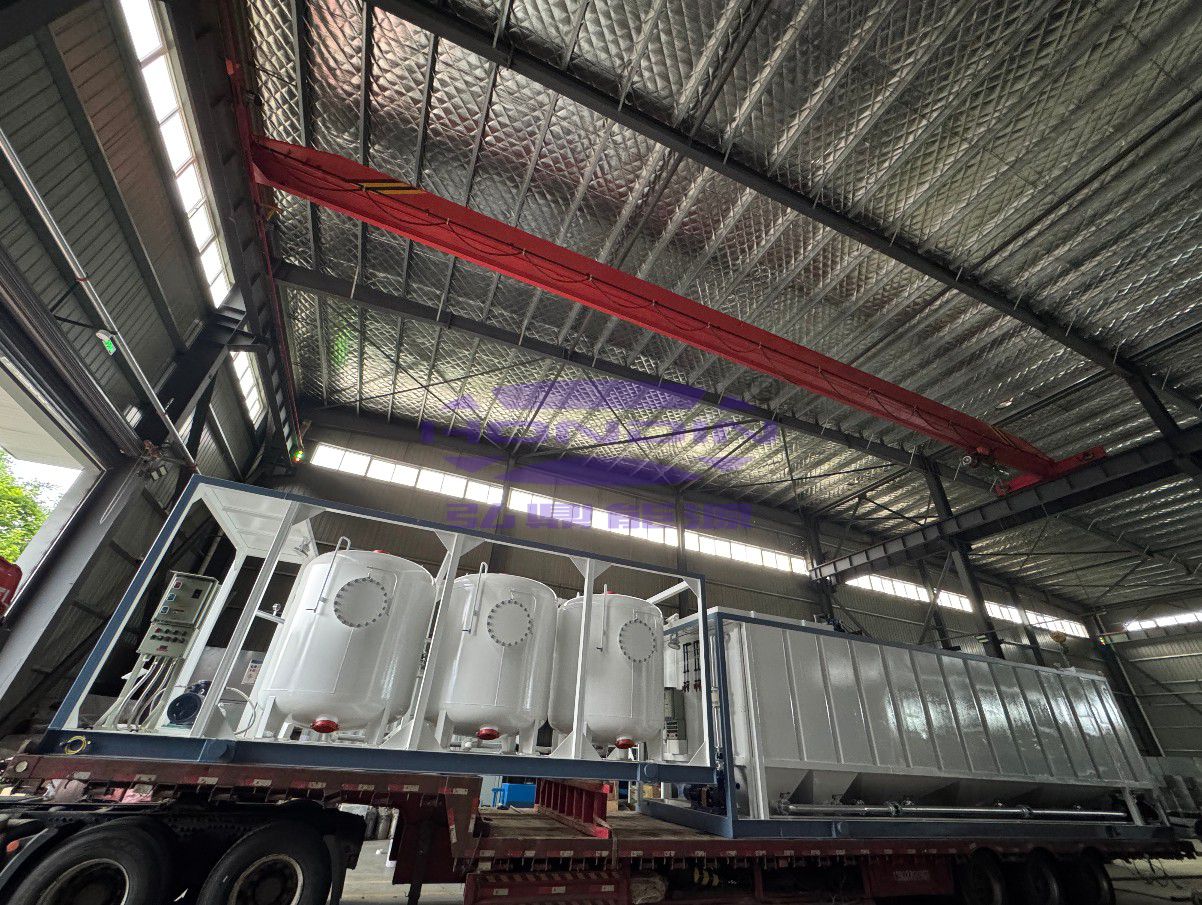
A comprehensive guide to the components of a drilling mud wastewater treatment system, from pre-treatment to solid-liquid separation.
The mud-free system is an integrated equipment system centered on solid-liquid separation, harmless waste treatment, and resource recovery. Its components are adjusted according to drilling conditions (oil-based/water-based mud) and processing scale. The core equipment can be divided into four main categories: pretreatment unit, solid-liquid separation unit, conveying unit, and auxiliary control unit,
MORE



-
Chemical Hot Washing for Oily Sludge: Process Stages and System Evaluation
-
The Role of Mud Cleaners in Weighted Drilling Fluid Solids Control
-
Waterflooding and Scale Control in Mature Oilfields
-
Gas Flotation in Produced Water Treatment Systems
-
Mud Agitator Role and Selection for Solids Control
-
Surface Fluid Systems for Acidizing Operations
-
Vertical Cuttings Dryer for Drilling Waste Management
-
Desander vs Desilter Selection for Solids Control


Add: No.462 Jinggao South Road, Gaoling District, Xi'an, Shaanxi Province, China
Mob/WhatsApp: +86 186 2931 2932/ +86 187 2900 8271
E-mail: sales@hondinchina.com

Follow us:

点击右上角
分享给朋友吧
点击右上角
分享给朋友吧
Copyright © Xi'an Hondin Energy Technology Co., Ltd. All rights reserved
Copyright © Xi'an Hondin Energy Technology Co., Ltd. All rights reserved