

News
Understand the working principle of fracturing flowback fluid treatment equipment in one article
Time:
2025-03-31
In the process of oil and gas extraction, fracturing technology is an important means to increase the production of oil and gas wells. However, the large amount of flowback fluid produced after fracturing operations is complex in composition and highly polluting. If it is not handled properly, it will cause serious harm to the environment. At this time, fracturing flowback fluid treatment equipment plays a key role. It can effectively purify these flowback fluids to meet environmental emission standards or be reusable. Today, let us take a deep look at the working principle of this type of equipment.
Characteristics of fracturing flowback fluid
Before discussing the working principle of the equipment, let's first understand the fracturing flowback fluid. Fracturing flowback fluid is the liquid that returns to the ground from the formation after hydraulic fracturing construction. It contains a variety of complex components, including various additives injected into the formation with the fracturing fluid, such as thickeners, degumming agents, bactericides, etc.; as well as crude oil, various minerals and microorganisms in the formation. These components make the fracturing flowback fluid have the characteristics of high chemical oxygen demand (COD), high suspended matter, high salinity, and heavy metal ions, which are extremely difficult to handle.
Working principle of treatment equipment
Pretreatment stage: Removal of large particle impurities
The fracturing return fluid treatment equipment first enters the pretreatment stage. The main purpose of this stage is to remove large particle impurities in the return fluid to prevent it from clogging or damaging the subsequent treatment unit. Commonly used methods include grid filtration and sedimentation. The grid is a metal grid with a certain spacing. When the return fluid flows through the grid, larger solid particles, such as sand, gravel, and rock chips, will be intercepted on the grid. Sedimentation uses gravity to gradually settle the solid particles in the return fluid to the bottom of the sedimentation tank. Through the two steps of grid filtration and sedimentation, the content of solid impurities in the return fluid can be effectively reduced.
Physical treatment stage: oil-water separation and filtration
After pretreatment, the return fluid enters the physical treatment stage. At this stage, the main task is to achieve oil-water separation and further remove fine particles. Commonly used technologies for oil-water separation are gravity separation, centrifugal separation, and coalescence separation. Gravity separation uses the different densities of oil and water. After standing for a period of time, the oil droplets will gradually float to the liquid surface, while the water remains in the lower layer. Centrifugal separation uses high-speed rotating equipment to separate oil and water under the action of centrifugal force. This method has higher separation efficiency. Coagulation separation is to let the return fluid pass through a specific coagulation material, and small oil droplets gather into large oil droplets on the surface of the material, thereby accelerating the oil-water separation process.
After the oil-water separation is completed, the water phase needs to be further filtered to remove finer particles and colloids. Common filtration methods include sand filtration, bag filtration and membrane filtration. Sand filtration is to let water pass through a filter tank filled with filter materials such as quartz sand, and impurities are intercepted in the sand layer. Bag filtration uses filter bags to intercept particles with a particle size larger than the pore size of the filter bag. Membrane filtration technology is relatively advanced. It can accurately filter out pollutants of different particle sizes according to the size of the membrane pore size, and the filtration accuracy can reach micron or even nanometer levels.
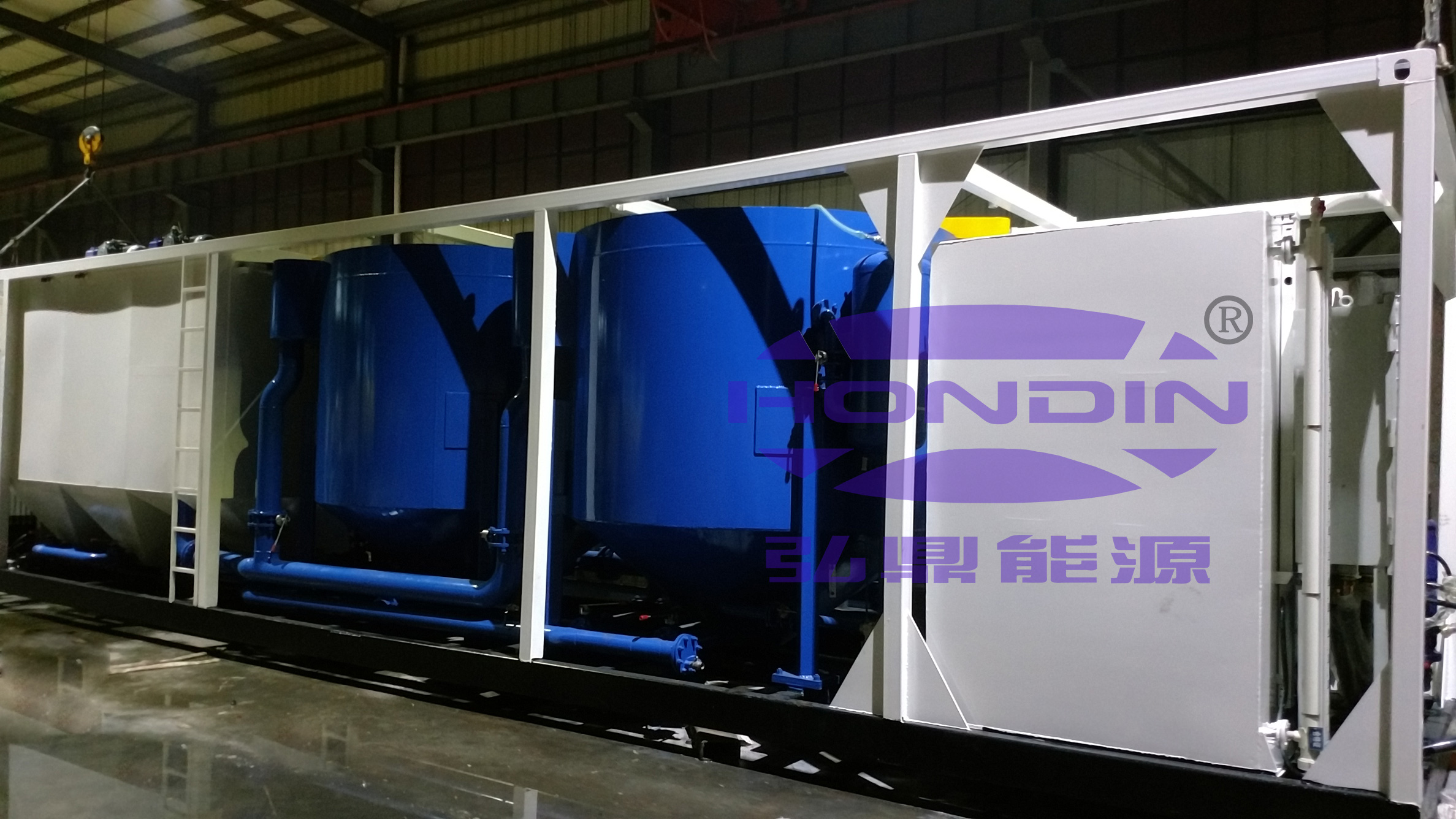
Chemical treatment stage: oxidation and flocculation
Although most of the impurities in the return fluid after physical treatment have been removed, it still contains some organic pollutants and soluble substances that are difficult to remove by physical methods. At this point, it is necessary to enter the chemical treatment stage. Chemical treatment mainly includes two processes: oxidation and flocculation.
Oxidation is the use of strong oxidants, such as hydrogen peroxide, ozone, etc., to oxidize and decompose organic pollutants into harmless substances such as carbon dioxide and water. Taking hydrogen peroxide as an example, it can produce hydroxyl radicals with strong oxidizing properties under the action of a catalyst. These free radicals can quickly react with organic pollutants and oxidize and degrade them.
Flocculation is the addition of flocculants, such as polyaluminum chloride, polyacrylamide, etc., to the return fluid. Flocculants can make tiny particles and colloidal substances in the water aggregate to form larger flocs, which are convenient for subsequent removal by precipitation or filtration. The working principle of flocculants is to condense the originally dispersed particles together through charge neutralization, adsorption bridging, etc.
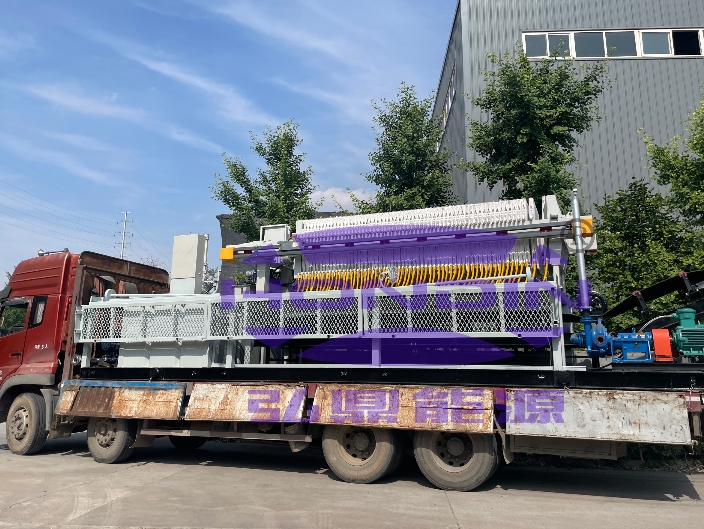
Biological treatment stage: microbial degradation
After chemical treatment, most of the pollutants in the return fluid have been removed, but some low-concentration organic pollutants may still be contained. In order to further reduce the concentration of pollutants and meet more stringent emission standards, biological treatment is required. Biological treatment uses the metabolism of microorganisms to decompose organic pollutants into carbon dioxide and water.
In the biological treatment pool, a large number of microorganisms are cultivated. These microorganisms feed on organic pollutants in the return fluid and convert them into harmless substances through their own life activities. According to the different needs of microorganisms for oxygen, biological treatment can be divided into aerobic biological treatment and anaerobic biological treatment. Aerobic biological treatment is in an aerobic environment, microorganisms use oxygen to completely oxidize and decompose organic pollutants; anaerobic biological treatment is in an anaerobic environment, microorganisms convert organic pollutants into gases such as methane through fermentation and other methods.
Deep treatment stage: ensure that water quality meets standards
After the previous treatment stages, the water quality of the return fluid has been greatly improved, but for some application scenarios with extremely high water quality requirements, such as reinjection into the formation or as production water, deep treatment is still required. Deep treatment methods include ion exchange, reverse osmosis, etc.
Ion exchange is the process of using ion exchange resin to exchange ions in the return fluid to remove heavy metal ions, hardness ions, etc. in water. For example, strong acid cation exchange resin can remove calcium and magnesium ions in water and reduce the hardness of water.
Reverse osmosis is a separation technology that uses the principle of semipermeable membrane. Under pressure, water can pass through the semipermeable membrane, while the solute is retained on the other side of the semipermeable membrane, thereby achieving the separation of water and solute. Reverse osmosis technology can effectively remove almost all impurities in water, such as soluble salts, microorganisms, viruses, etc., so that the treated water quality reaches a very high standard.
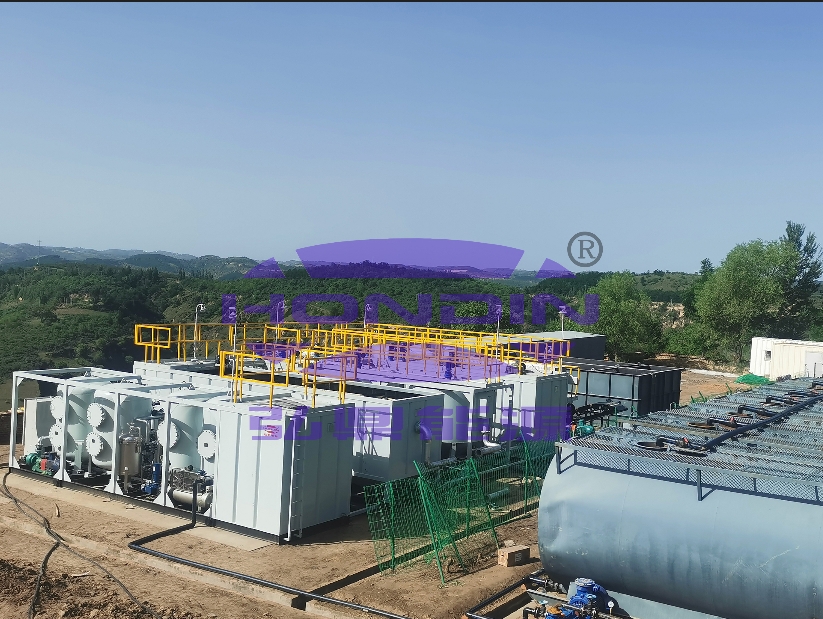
Advantages of the working principle of fracturing flowback fluid treatment equipment
Through the above series of complex and coordinated treatment processes, fracturing flowback fluid treatment equipment has shown many advantages.
First, it can adapt to fracturing flowback fluids with different characteristics. No matter how complex its composition is, it can be effectively purified through the corresponding treatment stages. Secondly, the equipment has high treatment efficiency and can process a large amount of flowback fluid in a short time to meet the needs of production operations such as oil fields. Furthermore, the water quality of the treated flowback fluid can meet strict environmental emission standards, greatly reducing the risk of environmental pollution. At the same time, part of the treated water can be reused in production, realizing the recycling of water resources and reducing the production costs of enterprises.
The working principle of fracturing flowback fluid treatment equipment is a complex system that integrates multidisciplinary knowledge such as physics, chemistry, and biology. Through the close cooperation of various treatment stages, it successfully converts environmentally harmful fracturing flowback fluids into usable or qualified water, providing a strong guarantee for the sustainable development of the oil and gas extraction industry. I hope that through the introduction of this article, everyone will have a clearer understanding of the working principle of fracturing flowback fluid treatment equipment.
Click:








文章推荐
Hot News
-

Chemical Hot Washing for Oily Sludge: Process Stages and System Evaluation
-
The Role of Mud Cleaners in Weighted Drilling Fluid Solids Control
-
Waterflooding and Scale Control in Mature Oilfields
-
Gas Flotation in Produced Water Treatment Systems
-
Mud Agitator Role and Selection for Solids Control
-
Surface Fluid Systems for Acidizing Operations
-
Vertical Cuttings Dryer for Drilling Waste Management
-
Desander vs Desilter Selection for Solids Control
-
Surface Blending and Pumping Systems for Well Stimulation
-
Produced Water Pretreatment for Reinjection and Reuse
-
Vacuum Degasser Role in Drilling Fluid Solids Control
-
Decanter Centrifuge for Oily Sludge Dewatering



Add: No.462 Jinggao South Road, Gaoling District, Xi'an, Shaanxi Province, China
Mob/WhatsApp: +86 186 2931 2932/ +86 187 2900 8271
E-mail: sales@hondinchina.com

Follow us:

点击右上角
分享给朋友吧
点击右上角
分享给朋友吧
Copyright © Xi'an Hondin Energy Technology Co., Ltd. All rights reserved
Copyright © Xi'an Hondin Energy Technology Co., Ltd. All rights reserved