

Cases
Understanding Drilling Waste Management Systems in One Article
Time:
2025-11-04
With global energy demand continuing to rise, oil, as a crucial traditional energy source, remains paramount in the energy structure. The booming development of the oil industry has driven the continuous expansion and increase in the scale and number of drilling operations. However, this has also brought about a serious problem—the disposal of drilling waste.
Drilling waste mainly includes waste mud, drill cuttings, and wastewater. These wastes have complex compositions, containing large amounts of chemical additives, heavy metals, and petroleum-based substances. Improper disposal can cause serious pollution to soil, water sources, and the ecological environment, disrupting the ecological balance and affecting the survival and reproduction of plants and animals. For example, harmful substances in waste mud may seep into the soil, leading to decreased soil fertility and affecting crop growth; heavy metals in drill cuttings, if they enter water sources, can pollute groundwater and endanger human health.
Traditional methods for disposing of drilling waste, such as landfill and incineration, have obvious drawbacks. Landfilling not only occupies vast amounts of land resources but can also lead to the leakage of hazardous substances from waste, polluting soil and groundwater. Incineration, on the other hand, produces large amounts of harmful gases, such as dioxins, causing severe air pollution and potentially secondary pollution. Furthermore, these traditional treatment methods are costly, imposing a heavy economic burden on enterprises.
Faced with increasingly stringent environmental regulations and the urgent need for sustainable development, developing efficient and environmentally friendly drilling waste treatment technologies has become a top priority for the oil industry. Against this backdrop, Xi'an Hongding Energy Technology Co., Ltd., leveraging its profound technological accumulation and continuous innovation, has launched an advanced drilling waste treatment system, providing strong support for the industry's environmental upgrade and potentially becoming a key breakthrough in solving this problem.

I. System Working Principle Revealed
The drilling waste treatment system integrates multiple advanced technologies, including physical, chemical, and biological treatments, forming a complete and efficient processing flow. Its aim is to minimize the environmental impact of drilling waste and achieve resource recycling.
(I) Physical Treatment: The First Step in Separation
Physical treatment is the primary step in the entire process. It primarily uses methods such as centrifugation, filtration, and pressing to effectively separate the solid and liquid phases in the drilling waste, reducing the burden on subsequent processing.
Centrifugation utilizes the high-speed rotation of a centrifuge drum to generate powerful centrifugal force. The solid phase in the material is thrown onto the filter media on the inner surface of the drum wall, where it is trapped and accumulates to form a ring-shaped solid. The liquid phase flows out through the filter cake and filter media, thus achieving solid-liquid separation. This is similar to the spin-drying function of a washing machine, where high-speed rotation removes water from clothes.
Filtration uses a filter media to allow the liquid phase in the drilling waste to pass through the filter cloth, while the solid phase is intercepted. For example, a common plate and frame filter press separates solids and liquids by creating a filtration space between filter plates and frames, applying pressure to the material. In practical applications, it can further remove moisture from drilling waste, significantly reducing the water content of the solid phase.
Pressing uses pressing machinery to apply pressure to the material, forcing the liquid phase to flow out while the solid phase is compressed. A belt filter press is a representative of this type of equipment. It uses two filter belts to squeeze the material, achieving significant dehydration. It plays an important role in drilling waste treatment, further reducing the water content of the solid phase and improving the treatment effect.
(II) Chemical Treatment: The 'Magic' of Decomposing Hazardous Substances
After the initial separation through physical treatment, although the drilling waste has been separated into solid and liquid phases, many harmful substances still remain in both phases. This is where chemical treatment plays a crucial role. Chemical treatment mainly involves adding specific chemical agents to separate and degrade the harmful substances in the waste.
Flocculants are commonly used agents in chemical treatment. Like glue, they agglomerate suspended solids in drilling waste into larger particles, facilitating subsequent separation and removal.
When flocculants are added to the waste, their molecules interact with the suspended particles, causing them to gradually aggregate into flocs through adsorption and bridging. These flocs then settle rapidly under gravity, achieving separation from the liquid phase.
For example, when treating drilling wastewater containing fine particles, adding an appropriate amount of flocculant quickly clarifies the originally turbid wastewater as the suspended solids are flocculated into larger particles and settle to the bottom.
Demulsifiers, on the other hand, are mainly used to disrupt the emulsion structure in oil-based drilling mud, enabling oil-water separation. Oil and water in oil-based drilling mud are usually in an emulsion state, exhibiting high stability and difficulty in natural separation. Demulsifiers reduce the interfacial tension between oil and water, displacing the emulsifier at the emulsion interface, reducing the interfacial film strength, and consequently causing droplet coalescence, achieving effective oil-water separation.
In the crude oil dehydration process after oil extraction, demulsifiers play a crucial role, rapidly separating water from the crude oil and improving its purity.
Oxidants can oxidize and degrade organic pollutants in drilling waste, reducing their environmental harm. Strong oxidants such as ozone and hydrogen peroxide can chemically react with organic pollutants, decomposing them into harmless substances like carbon dioxide and water. For example, when treating drilling wastewater containing organic pollutants, adding an appropriate amount of ozone, after a period of reaction, will significantly reduce the concentration of organic pollutants in the wastewater, meeting discharge standards.

(III) Biological Treatment: The Ingenious Utilization of Nature's Power
Biological treatment utilizes the metabolic activity of microorganisms to degrade organic pollutants in drilling waste into harmless substances, fully embodying the concept of environmental protection and serving as a crucial link in the entire treatment system.
Under suitable environmental conditions, microorganisms treat organic pollutants in drilling waste as 'food,' decomposing them through their own metabolic activities. In aerobic biological treatment, aerobic microorganisms (such as bacteria in activated sludge) decompose organic matter into harmless substances such as carbon dioxide, water, and nitrates under aerobic conditions. Activated sludge, composed of microbial communities including bacteria, fungi, protozoa, and metazoa, possesses a strong capacity for adsorption, absorption, and degradation of organic matter.
When dissolved organic matter in wastewater is absorbed by bacteria through cell membranes, or when solid and colloidal organic matter is decomposed into soluble substances by enzymes secreted by bacteria, this organic matter is then decomposed into carbon dioxide and water through microbial oxidation under aerobic conditions, releasing energy.
This process not only effectively removes organic matter from wastewater but also reduces the content of nutrients such as nitrogen and phosphorus, thus purifying the wastewater.
Anaerobic biological treatment, on the other hand, utilizes anaerobic microorganisms (such as acid-producing bacteria and methanogens) under anaerobic or low-oxygen conditions to decompose organic matter into gases such as methane and carbon dioxide, as well as stable sediments. This process is relatively complex and generally consists of a hydrolysis stage, an acetic acid production stage, a hydrogen production stage (usually simultaneous with the acetic acid production stage), and a methanogenesis stage.
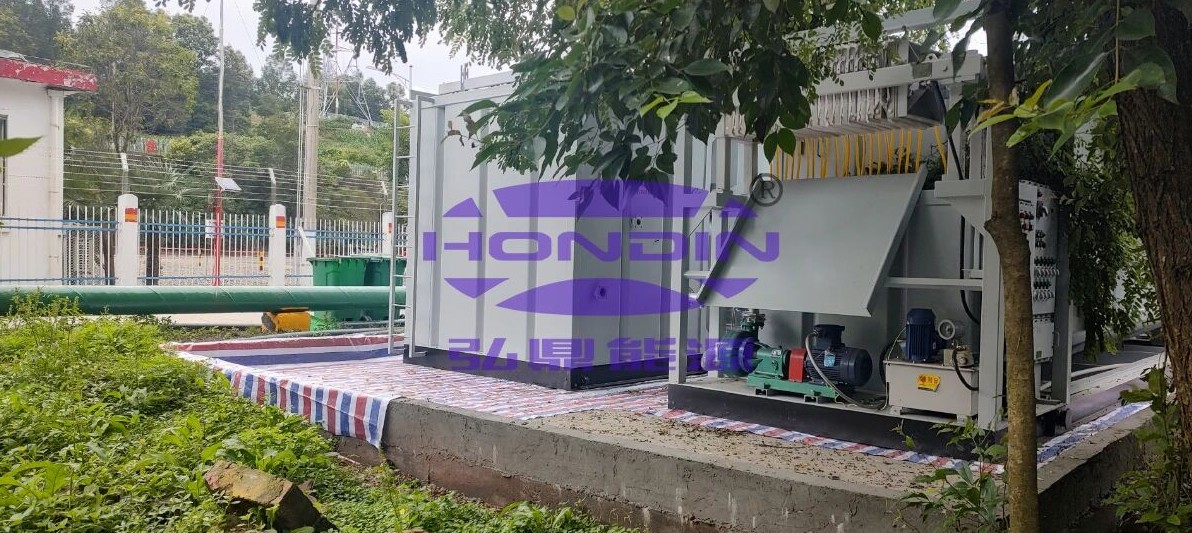
After macromolecular organic matter is broken down into easily decomposed organic compounds such as glucose by anaerobic bacteria, these compounds are further degraded into organic acids, alcohols, aldehydes, ammonia, carbon dioxide, etc.
Finally, under the action of methanogenic bacteria, these metabolic products are further decomposed into biogases such as methane and carbon dioxide. This process not only removes organic matter but also generates usable biogas resources; for example, methane can be used as a clean energy source.
Common biological treatment equipment includes bioreactors and biological ventilation systems. Bioreactors thoroughly mix drilling waste with microorganisms and nutrient solutions, and the degradation process takes place in the reactor, providing a suitable environment for the microorganisms to live and metabolize, promoting the degradation of organic pollutants.
Biological ventilation systems involve drilling a well in the drilling waste to be treated, installing blowers and vacuum pumps, and forcibly injecting air containing biodegrading bacteria into the treated material, allowing the microorganisms to better degrade organic matter under aerobic conditions. Biological treatment has significant advantages such as minimal environmental side effects and no damage to soil structure, and the final products are harmless substances such as carbon dioxide, water, and fatty acids, making it very environmentally friendly.
II. System Composition
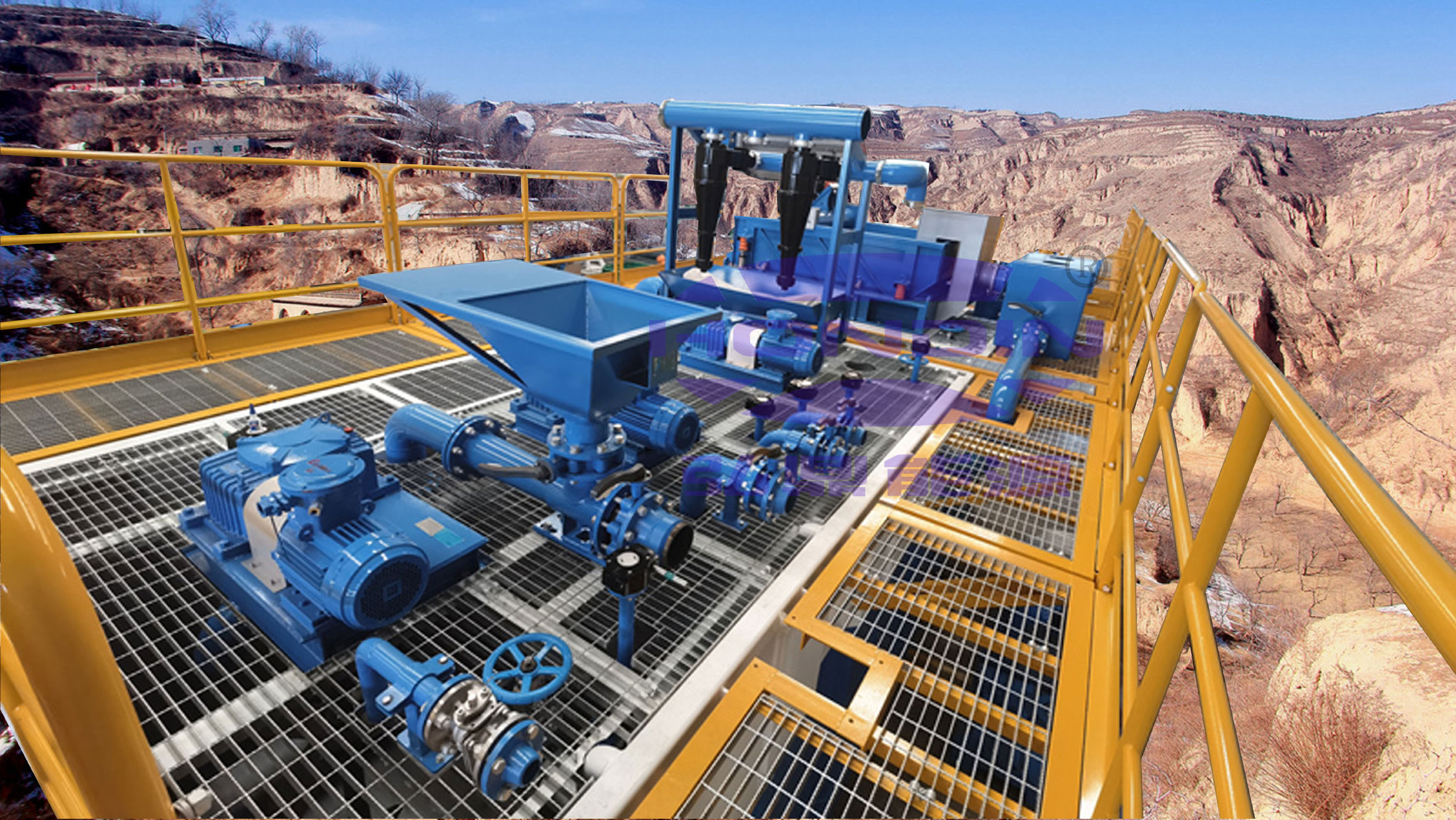
The efficient operation of the drilling waste treatment system relies on the coordinated efforts of a series of core devices, each playing a unique role and collectively forming a complete treatment system.
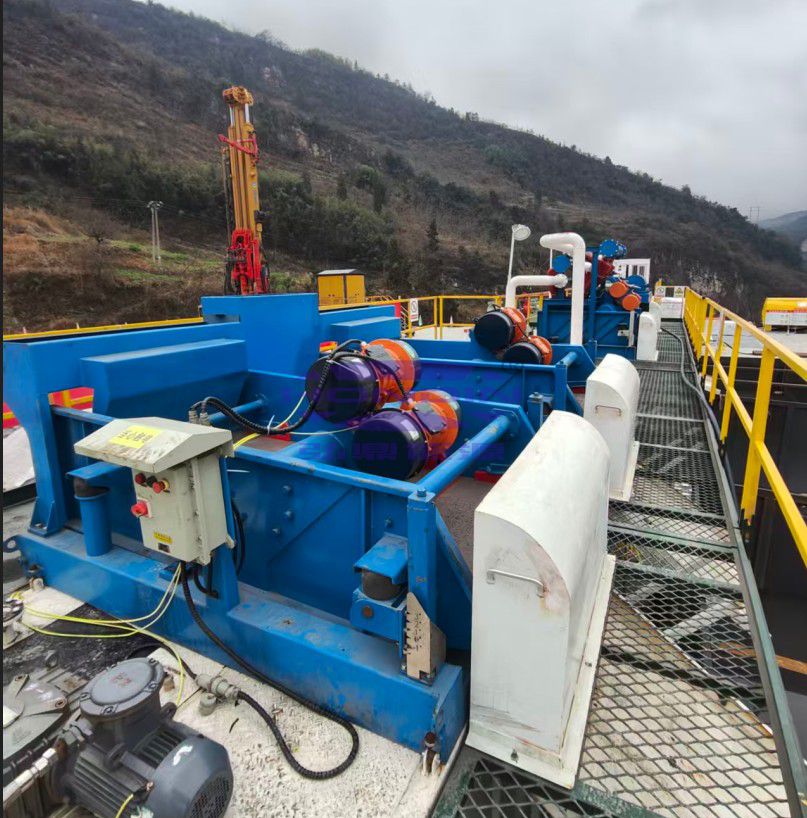
When the suspension is added to the rotating drum, it rotates at high speed, generating strong centrifugal pressure. This forces the liquid in the suspension through the filter media and the holes in the drum wall, while the solids are trapped on the surface of the filter media, achieving rapid and efficient solid-liquid separation. Its processing capacity can reach 30-50 tons per hour, and the oil content of the treated drill cuttings is less than 5%, effectively achieving the reduction, harmlessness, and resource recovery of waste drilling fluid. The unloading scraper is made of hard alloy material, ensuring durability; the screen basket is made of 304 stainless steel, offering strong corrosion resistance; and an independent oil cooling system and a scientifically designed oil tank cooling system ensure stable operation of the equipment in high-temperature environments.
Centrifuges are also crucial for achieving efficient solid-liquid separation and are widely used in drilling waste treatment. A common horizontal screw centrifuge uses centrifugal force to cause solid particles in a suspension to settle on the inner wall of the drum through the relative rotation of the drum and the screw conveyor. The screw conveyor pushes the settled solids toward the discharge port at the small end of the drum, while the liquid overflows from the overflow port at the large end of the drum, thus achieving solid-liquid separation.

In processing drilling waste, it effectively separates micron-sized particles and recovers valuable components such as barite, improving resource utilization. It boasts a high separation factor, large processing capacity, continuous operation, and a high degree of automation, significantly enhancing processing efficiency.
The screw conveyor is primarily responsible for transporting materials during the processing, such as conveying dried drill cuttings processed by the drill cuttings dryer to a designated location. It utilizes a shaft with helical blades rotating in a closed trough, propelling the material along the trough.
Its simple structure allows for closed conveying, and the flexible loading and unloading points can meet diverse conveying needs. In the drilling waste treatment system, it works closely with other equipment to ensure smooth material transport and maintain the continuity of the entire processing flow. However, it is not suitable for conveying easily perishable, highly viscous, or easily agglomerated materials; its selection must be based on the material characteristics during use.
The mud tank is the core carrier of the drilling fluid solids control system, playing a crucial role in storing, blending, and circulating drilling fluid throughout the entire treatment system. It functions like a large 'mud warehouse,' connecting the wellhead and mud pump, serving as the hub for mud circulation. The mud tank integrates equipment such as a vibrating screen, desander, and centrifuge, achieving functions like solid-liquid separation, mud preparation, and circulation. The tank is equipped with an agitator, mud gun, and baffles to prevent drilling fluid solid phase sedimentation or stratification, ensuring uniform and stable mud.
Through the agitation system and chemical additive device, mud density, viscosity, and other parameters can be adjusted in real time to meet drilling process requirements. Furthermore, the mud tank adopts a modular layout, with multiple tanks connected in series, each with its own sedimentation chamber, suction chamber, and preparation chamber, enabling staged treatment and improving processing efficiency.

III. Conclusion
Drilling waste treatment systems, as a key force in the environmental transformation of the petroleum industry, have demonstrated immeasurable value in protecting the ecological environment, promoting resource recycling, and fostering sustainable development for enterprises. They not only effectively solve the environmental pollution problem caused by drilling waste, reducing its harm to soil, water, and air, but also achieve resource recycling and reuse through innovative treatment technologies, reducing costs and improving economic efficiency for enterprises.
In today's world, with ever-increasing global environmental awareness, environmental protection has become a shared responsibility of all humankind. As one of the industries with the greatest environmental impact, the drilling industry should actively shoulder its environmental responsibility and increase investment in and application of advanced treatment technologies and equipment.
We call on the entire industry to attach great importance to environmental issues and work together to promote the continuous progress and development of drilling waste treatment technology.
Click:








文章推荐
Hot Cases
-

How a Drilling Mud Solids Control System Improves Mud Reuse
-
How an Oily Sludge Treatment System Improves Oilfield Waste Management
-
HONDIN Energy Slurry Mixers: High-efficiency slurry mixing solutions suitable for various working conditions
-
The successful delivery of hazardous waste containers helps customers achieve standardized temporary storage management of hazardous waste.
-
Reco Water quality deterioration, easy clogging, tight deadlines? This skid-mounted oilfield and fracturing flowback fluid treatment system is designed for complex operating conditions!
-
Why are engineering projects becoming increasingly reliant on mud solids control systems?
-
Environmentally friendly treatment of drilling waste – achieving full compliance with solid and liquid standards and resource reuse.
-
Exploration of Improvements to Drilling Mud Non-Drop Equipment
-
Core Advantages and Application Analysis of Coalbed Methane Well Solids Control Systems
-
Core equipment of mud-free system
-
Current Status and Improvement Measures of Drilling Fluid Solids Control Systems
-
Understanding the Mud-Free System in One Article




Add: No.462 Jinggao South Road, Gaoling District, Xi'an, Shaanxi Province, China
Mob/WhatsApp: +86 186 2931 2932/ +86 187 2900 8271
E-mail: sales@hondinchina.com

Follow us:

点击右上角
分享给朋友吧
点击右上角
分享给朋友吧
Copyright © Xi'an Hondin Energy Technology Co., Ltd. All rights reserved
Copyright © Xi'an Hondin Energy Technology Co., Ltd. All rights reserved