

Cases
Exploration of Improvements to Drilling Mud Non-Drop Equipment
Time:
2026-03-26
In oilfield drilling production, safety and environmental protection requirements are becoming increasingly stringent, and zero-drilling-mud disposal has become a mandatory industry standard. The Equipment Asset Department of the Second Drilling Company of a certain drilling engineering company addressed the pain points in drilling mud treatment by focusing on three core aspects: wellhead mud transportation, waste mud and cuttings removal, and mud solids content treatment. They conducted a series of modifications and innovations to the solids control circulation system equipment, resulting in a mature technical solution for zero-drilling-mud disposal equipment improvement. This effectively solved many problems in mud treatment, balancing environmental requirements with drilling production efficiency.
I. Pain Points Before Modification: Prominent Problems in Three Key Aspects Restricted the Implementation of Zero-Drilling-Mud Disposal
Before the equipment improvements, all three core aspects of drilling mud treatment had significant problems, which not only affected the effectiveness of zero-drilling-mud disposal but also increased production manpower and material costs and reduced drilling operation efficiency.
1. Wellhead Mud Transportation: A vertical sand pump is used to transport the wellhead mud back to the vibrating screen in a closed system. Although this eliminates the need for surface circulation ditches, the pump blades cause secondary crushing of the mud and rock cuttings, compromising the mud's ability to encapsulate the cuttings and hindering subsequent solids control equipment processing.
2. Waste Mud and Rock Cuttings Removal
High Tank Cleaning Difficulty: Initially, a winch and self-priming pump were used in the mud tank conical hopper for sand removal. In summer, only 80% of the cleaning could be completed, with an average well completion cleaning taking 6-10 hours. In winter, the winch was completely unusable. Later, a sloping tank bottom structure + agitator + annular mud gun was used. However, sand still easily settles during rapid drilling, clogging the mud gun, and the sand's participation in circulation leads to excessively high sand content in the mud.
High Transportation Costs: A sand collection pit replaces the surface sand pit, relying on excavators and dump trucks to transport waste rock cuttings. Due to the limited capacity of the sand collection pit, the equipment needs frequent operation, significantly increasing drilling production costs.
3. Mud Solids Content Treatment: While methods such as replacing single-screen with double-screen, increasing the mesh size of the vibrating screen, and adding dual desanders were used to improve solids control, the difficulty in cleaning the mud tank resulted in continuous participation of settled sand in the mud circulation, leading to persistently high solids content and significantly reducing the actual solids control effect.
II. Improvement Strategies
Addressing the problems exposed in the previous modifications, the project team identified two core unresolved issues: difficulty in cleaning the mud tank and control of mud solids content. Simultaneously, focusing on optimizing the wellhead lift pump and cuttings transportation, a new improvement strategy was developed:
1. Solids Control System: Transforming 'passive cleaning' into 'active treatment' to prevent mud and sand deposition at the source and maximize the removal of harmful solids. This involves prioritizing solids control equipment with high throughput and a wide range of solid particle handling capabilities; optimizing the solids control system process to shorten the residence time of mud between primary and secondary solids control treatments, thus eliminating mud and sand sedimentation.
2. Wellhead Lift Pump: Finding a pump type that can replace the vertical sand pump without damaging the cuttings to ensure the screening effect of the subsequent vibrating screen. 3. Cuttings Loading and Transportation: An automated loading and transportation solution, modeled after conveyor belts, will be designed to replace the traditional excavator + dump truck model, saving equipment and labor costs.
III. Specific Implementation Plan: Upgraded Equipment and Processes for Efficient Processing
Based on innovative thinking, the project team developed detailed improvement plans for three aspects: solids control system, wellhead lift pump, and waste mud and cuttings loading and transportation. This achieved a comprehensive upgrade in equipment selection, process design, and tank structure.
(I) Solids Control System: Triple Improvement of Equipment, Process, and Tank for Source Sand Control
1. Introduction of New High-Efficiency Solids Control Equipment
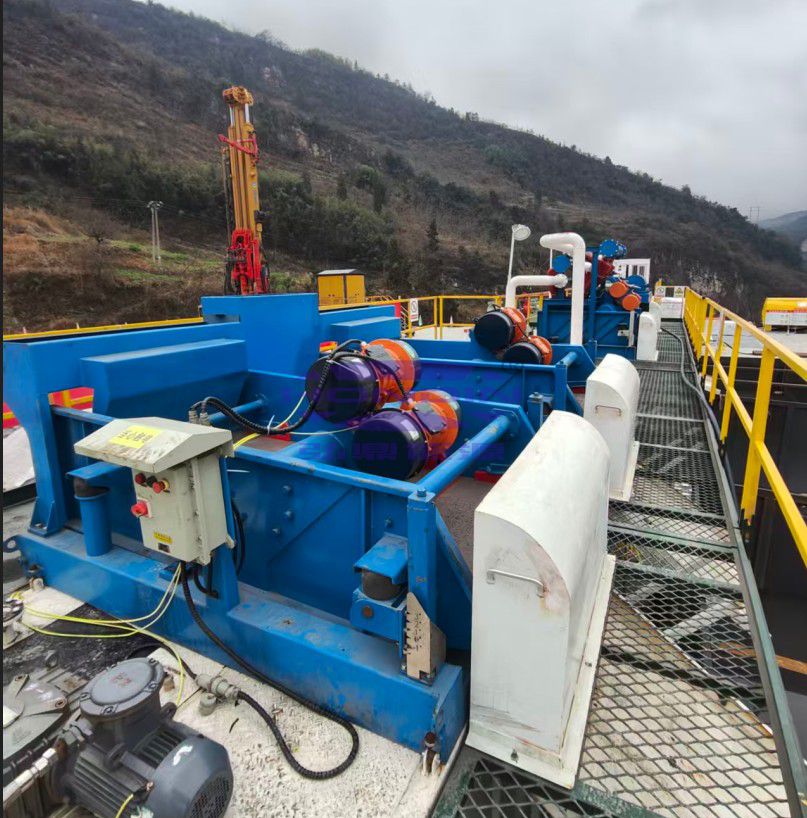
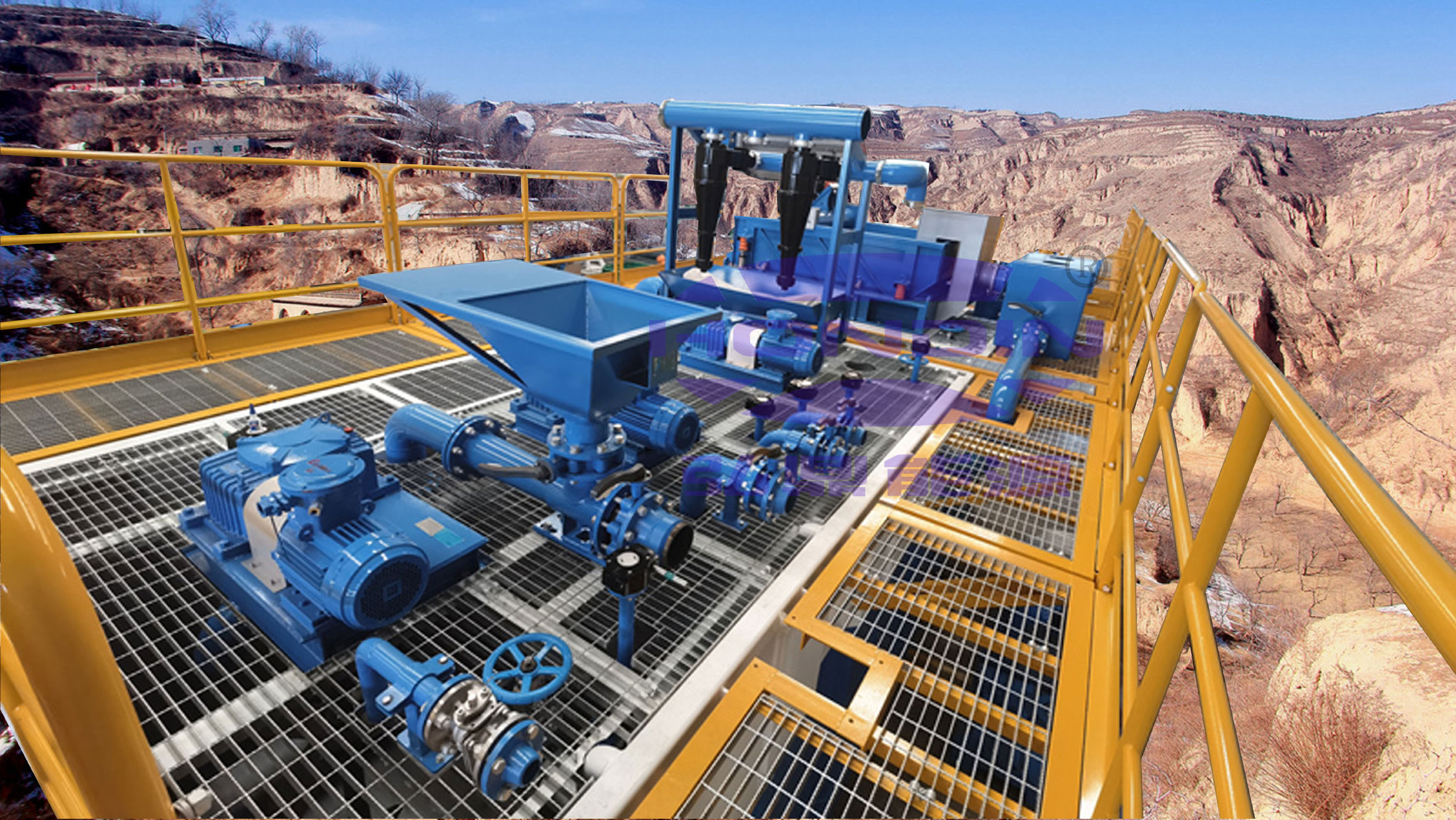
Centrifugal Mud Purification Integrated Machine: Integrates the functions of a desander and a centrifuge, achieving a processing capacity comparable to a desander and particle handling capacity comparable to a regular centrifuge. After treatment, the drilling fluid sand content is below 0.2% (far below the industry standard of ≤2%). Equipped with a frequency converter drive, the speed and processing capacity can be adjusted, preventing the mishandling of stone powder at high specific gravity. Excellent core technical parameters (maximum design speed 1700 rpm, maximum separation factor 1052 g, maximum water flow capacity 80 m³/h, etc.).
Mulch Mixing and Jetting Integrated Machine: Based on the traditional mixer, a high-pressure drilling fluid spray gun is added near the blades to form a rotating mud gun, effectively preventing solid particle settling in dead corners within the tank, thus avoiding sand accumulation at the source.
2. Optimized Solids Control Tank Process
The original process of sedimentation in the mud tank conical chamber was eliminated. The mud, after primary treatment by the vibrating screen, is immediately agitated by an integrated mixing and jetting machine and then directly supplied to the integrated mud purification machine for secondary treatment. The treated mud is then directly fed into mud tank #2. Simultaneously, supply pumps are installed in each compartment of mud tank #2 to circulate the mud to the purification machine for further treatment, further reducing the solids content and completely resolving the issue of sediment participating in the circulation.
3. Improved Solids Control Tank Structure
The bottom of the vibrating screen in mud tank #1 is designed as a cone to facilitate the evacuation of mud from the compartment by the supply pumps. The bottoms of the other compartments adopt a cone shape with a slope, and overflow holes are provided at the top of the cone tank. A 0.5-meter-high baffle is installed at the bottom of mud tank #2 in the middle to optimize mud flow and treatment efficiency.
(II) Wellhead Lifting Pump: Spiral Centrifugal Pump Replaces Vertical Sand Pump, Protecting Cuttings from Damage
A small tank equipped with a spiral centrifugal pump is designed and manufactured, installed on the side of the drilling rig's lower deck, to lift wellhead mud to the vibrating screen. This pump type effectively protects the cuttings in the mud from damage, ensuring the screening effect of the subsequent vibrating screen, and solving the pain point of secondary cuttings crushing by vertical sand pumps.
(III) Waste Mud and Cuttings Transportation: Automated Upgrades for Efficient and Low-Cost Removal
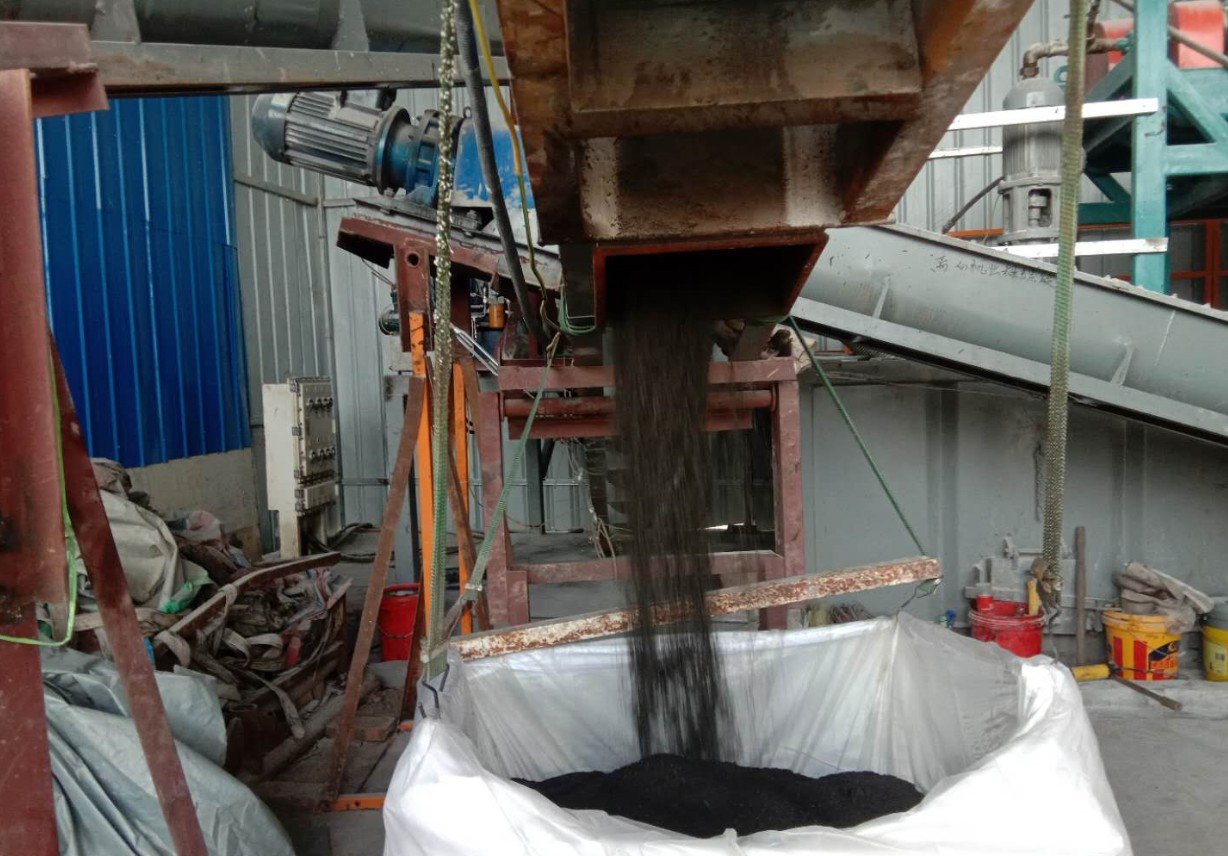
1. Automated Transfer: Cuttings and waste drilling fluid processed by the solids control equipment flow into the cuttings collection pool, and are directly transported to transport vehicles via two spiral conveyors, replacing the traditional excavator + dump truck mode, achieving automated loading and significantly reducing equipment operation frequency.
2. Equipment Optimization and Upgrade: Based on the problems found in the test, subsequent technical improvement measures were formulated: the spiral centrifugal pump motor power was increased to 37KW to increase the processing capacity; a heating device was added to the cuttings collection tank to ensure normal operation in winter; the sand discharge structure of the cuttings collection tank was studied and optimized for smoother sand discharge.
IV. Field Test Results
The project team completed the fabrication of three sets of new solids control system mud solids control circulation tanks. Simultaneous testing was conducted in three drilling teams across three oilfield regions, completing test operations on a total of 15 wells. The improvements were significant, successfully solving three core problems related to preventing mud from spilling:
1. Complete Solution to Tank Cleaning Problems: During drilling, the No. 1 mud tank cone chamber was virtually free of sediment, and sediment levels in other tank chambers were controlled to within 10%. This eliminated the need for extensive manpower and resources for tank cleaning, completely overcoming the difficulties and time-consuming nature of the process.
2. Significantly Reduced Mud Solids Content: After treatment with a high-performance integrated mud purification machine and multiple circulation purification cycles, the mud solids content in all three test drilling teams significantly decreased, reaching 0.3±0.2%, 0.5±0.2%, and 0.5±0.2% respectively, far exceeding the levels before the modification.
3. Increased production efficiency and reduced costs: Automated cuttings handling replaces the traditional method, reducing the frequent operation of excavators and dump trucks, and lowering equipment and labor costs. Optimized mud treatment processes prevent interference from sediment circulation in drilling operations, improving overall drilling production efficiency.
4. Full compliance with environmental requirements: Through a fully enclosed process, no sediment accumulation, and automated cuttings removal, drilling mud is truly kept off the ground, fully complying with oilfield safety and environmental regulations regarding mud discharge.








Hot Cases
-

How a Drilling Mud Solids Control System Improves Mud Reuse
-
How an Oily Sludge Treatment System Improves Oilfield Waste Management
-
HONDIN Energy Slurry Mixers: High-efficiency slurry mixing solutions suitable for various working conditions
-
The successful delivery of hazardous waste containers helps customers achieve standardized temporary storage management of hazardous waste.
-
Reco Water quality deterioration, easy clogging, tight deadlines? This skid-mounted oilfield and fracturing flowback fluid treatment system is designed for complex operating conditions!
-
Why are engineering projects becoming increasingly reliant on mud solids control systems?
-
Environmentally friendly treatment of drilling waste – achieving full compliance with solid and liquid standards and resource reuse.
-
Exploration of Improvements to Drilling Mud Non-Drop Equipment
-
Core Advantages and Application Analysis of Coalbed Methane Well Solids Control Systems
-
Core equipment of mud-free system
-
Current Status and Improvement Measures of Drilling Fluid Solids Control Systems
-
Understanding the Mud-Free System in One Article




Add: No.462 Jinggao South Road, Gaoling District, Xi'an, Shaanxi Province, China
Mob/WhatsApp: +86 186 2931 2932/ +86 187 2900 8271
E-mail: sales@hondinchina.com

Follow us:

点击右上角
分享给朋友吧
点击右上角
分享给朋友吧
Copyright © Xi'an Hondin Energy Technology Co., Ltd. All rights reserved
Copyright © Xi'an Hondin Energy Technology Co., Ltd. All rights reserved