

Cases
The role of cyclone desander: a "fine screen" that protects the purity of drilling fluid
Time:
2025-10-09
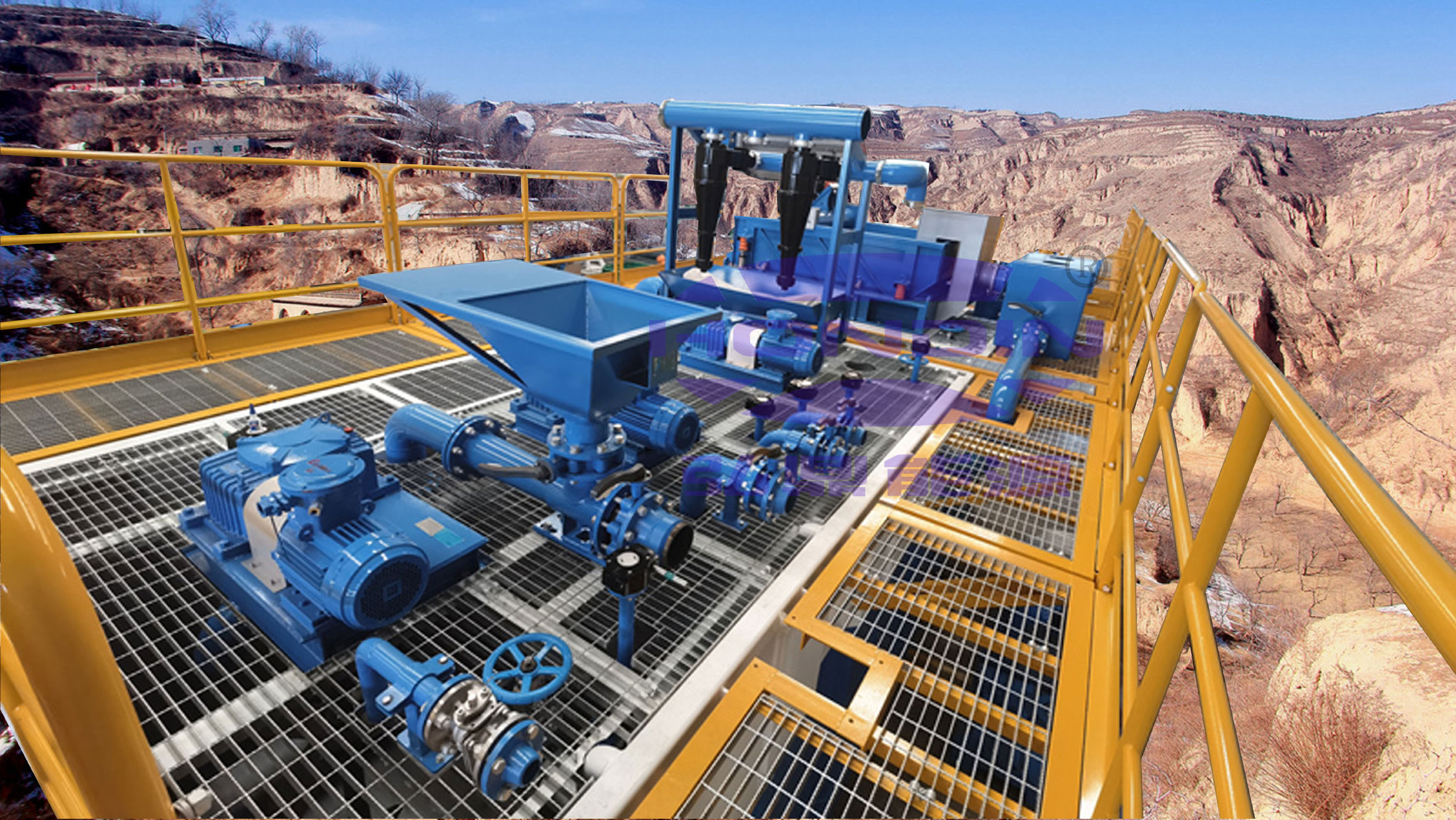
In oilfield drilling fluid solids control systems, cyclone desanders are the core secondary purification equipment following coarse screening on vibrating screens. They efficiently separate fine solids (such as fine drill cuttings and sand particles) ranging from 10-74μm from the drilling fluid. This process achieves 'fine purification' of the drilling fluid through the principle of physical centrifugation. This is a key step in ensuring stable drilling fluid performance and reducing subsequent processing loads. Its role can be deeply analyzed from the perspectives of drilling efficiency, cost control, and equipment protection.
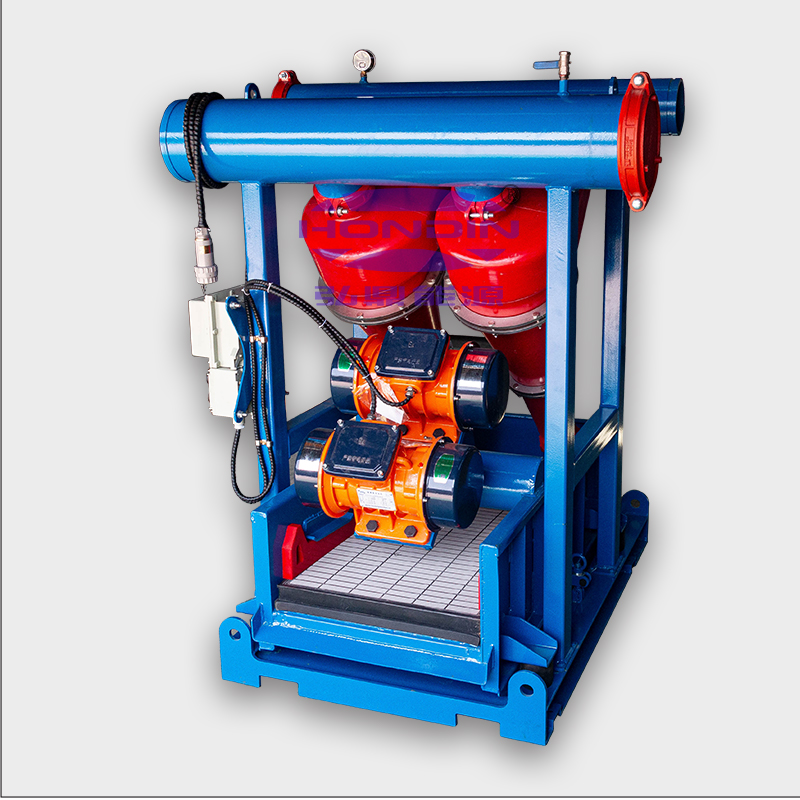
1. Core Function: Precisely Separating Fine Particles to Maintain Stable Drilling Fluid Performance
During the drilling fluid circulation process, after the vibrating screen initially separates coarse drill cuttings ≥74μm, a large amount of fine sand particles and colloidal solids ranging from 10-74μm remain. If these fine particles are not promptly removed, they will continuously degrade the rheological properties of the drilling fluid. On the one hand, they increase the viscosity and shear force of the drilling fluid, reduce its fluidity, and increase the pumping resistance of the drilling pump. On the other hand, they will absorb the treatment agents (such as viscosity reducers and flocculants) in the drilling fluid, rendering them ineffective, and thus leading to downhole risks such as 'drill bit balling' and 'wellbore reduction.'
The cyclone desander solves this problem by utilizing the principle of centrifugal sedimentation: Drilling fluid enters the conical chamber at a high speed (5-8 m/s) tangentially from the device, forming a strong rotating vortex within the chamber (speeds can reach 2000-3000 r/min). The density difference between fine sand particles and drilling fluid (sand density is approximately 2.6 g/cm³, drilling fluid density is approximately 1.2-1.4 g/cm³), causing the sand particles to be flung toward the chamber wall under centrifugal force, sinking along the wall to the bottom sand discharge port. The purified drilling fluid then forms an inner vortex, flows out of the top overflow port, and is reused in the drilling cycle.
Data shows that high-quality cyclone desanders can achieve a separation efficiency of over 85% for fine particles sized 10-74μm. After application in a shale gas field, the sand content of drilling fluid was reduced from 3.5% to below 0.8%, and viscosity was stably controlled within the optimal range of 35-45s/s, effectively preventing degradation of drilling fluid performance due to excessive solids.
Second, Auxiliary Benefits: Reduces the load on downstream equipment and extends the life of the solids control system.
The 'pre-cleaning' of the cyclone desander significantly reduces the processing pressure on downstream equipment such as desilters and centrifuges, prevents wear and clogging of high-precision equipment caused by fine particles, and extends the operation and maintenance cycle of the entire solids control system.
For desilters: If the cyclone desander fails to effectively separate particles sized 10-74μm, the desilter core will become clogged, requiring frequent disassembly and cleaning. This not only affects treatment efficiency but also damages seals due to repeated disassembly and installation, shortening the equipment's lifespan. After pre-treatment with the cyclone desander, the desilter only needs to focus on ultrafine particles sized 10μm or smaller, improving operational stability by 60% and reducing maintenance frequency from twice a week to once a month.
For centrifuges: As the 'deep purification terminal' of solids control systems, centrifuges feature extremely high-precision core components (the drum and auger). Fine sand entering the centrifuge can exacerbate wear on the inner wall of the drum, leading to inaccurate differential speed control and reduced separation efficiency. Cyclone desanders can intercept over 90% of harmful fine sand, extending the lifespan of the centrifuge's core components from 8,000 hours to 12,000 hours and reducing equipment replacement costs by over 30%.

3. Extended Benefits: Reduced Resource Consumption and Overall Drilling Costs.
Effective separation of fine particles can also indirectly reduce drilling fluid replenishment and treatment agent consumption, lowering overall costs for oilfields. Firstly, the removal of fine sand prevents drilling fluid from becoming ineffective due to solids contamination, reducing the frequency of new drilling fluid replenishment. Data from one oilfield shows that after installing a high-efficiency cyclone desander, the drilling fluid replenishment volume per well was reduced from 300 m³ to 180 m³. Based on a high-quality drilling fluid price of 800 yuan/m³, this directly saves 96,000 yuan per well. Secondly, fine particles no longer absorb treatment agents, increasing the utilization rate of drilling fluid agents such as viscosity reducers and lubricants by 25% and reducing the amount of added agents by 15%-20%, further reducing consumable costs.
Furthermore, the separated dry sand (moisture content ≤ 15%) can be directly used for paving well site roads, reducing solid waste transportation and landfill costs, creating a virtuous cycle of 'purification - cost reduction - resource reuse.'
IV. Key Adaptation: Optimizing for Different Operating Conditions to Ensure Effective Performance.
To ensure the full effectiveness of cyclone desanders, equipment selection and parameter adjustments must be tailored to oilfield drilling conditions (such as drilling fluid type, sand content, and processing volume):
For wells with high sand content (e.g., those in sandstone formations): Utilize a cyclone desander with a large taper angle (20°-30°) to increase sand removal speed and prevent sand accumulation within the chamber.
For high-volume wells (e.g., horizontal shale gas wells): Utilize a multi-cyclone parallel design (typically 6-12 cyclone groups) to achieve a daily processing capacity of 800-1200 m³ per unit, matching the required drilling fluid circulation volume.
For low-temperature wells (e.g., those in polar oilfields): Utilize a cyclone chamber constructed of cryogenically resistant materials (e.g., 304 stainless steel) to prevent equipment brittleness caused by low temperatures and ensure separation efficiency is unaffected by environmental factors.
Conclusion: Cyclone Desanders—The Performance Guardians of Solids Control Systems
While not the most critical 'terminal equipment' in oilfield drilling fluid treatment, cyclone desanders serve as the critical link between 'coarse screening' and 'deep purification.' By precisely separating fine particles, they not only safeguard the stability of drilling fluid performance, but also reduce the burden on downstream equipment, indirectly reducing costs and conserving resources in the oilfield.
As drilling expands into ultra-deep wells and complex formations, cyclone desanders are being upgraded to offer high throughput, high separation efficiency, and anti-clogging capabilities. They continue to support the efficient operation of solids control systems and have become an indispensable component of green drilling in oilfields.
你的喜欢,就是我坚持写下去的能量器
YouArticle
已有0人推荐
Click:








文章推荐
Hot Cases
-

How a Drilling Mud Solids Control System Improves Mud Reuse
-
How an Oily Sludge Treatment System Improves Oilfield Waste Management
-
HONDIN Energy Slurry Mixers: High-efficiency slurry mixing solutions suitable for various working conditions
-
The successful delivery of hazardous waste containers helps customers achieve standardized temporary storage management of hazardous waste.
-
Reco Water quality deterioration, easy clogging, tight deadlines? This skid-mounted oilfield and fracturing flowback fluid treatment system is designed for complex operating conditions!
-
Why are engineering projects becoming increasingly reliant on mud solids control systems?
-
Environmentally friendly treatment of drilling waste – achieving full compliance with solid and liquid standards and resource reuse.
-
Exploration of Improvements to Drilling Mud Non-Drop Equipment
-
Core Advantages and Application Analysis of Coalbed Methane Well Solids Control Systems
-
Core equipment of mud-free system
-
Current Status and Improvement Measures of Drilling Fluid Solids Control Systems
-
Understanding the Mud-Free System in One Article




Add: No.462 Jinggao South Road, Gaoling District, Xi'an, Shaanxi Province, China
Mob/WhatsApp: +86 186 2931 2932/ +86 187 2900 8271
E-mail: sales@hondinchina.com

Follow us:

点击右上角
分享给朋友吧
点击右上角
分享给朋友吧
Copyright © Xi'an Hondin Energy Technology Co., Ltd. All rights reserved
Copyright © Xi'an Hondin Energy Technology Co., Ltd. All rights reserved