

Cases
Drilling Safety "Invisible Barrier": Why is the Liquid-Gas Separator the Core Equipment for Preventing Blowouts and Stabilizing Processes?
Time:
2025-10-10
In oil and gas drilling operations, the gas-liquid separator is a key piece of equipment for ensuring drilling safety. It primarily separates natural gas, hydrogen sulfide, and other gases from the drilling fluid circulation system, preventing gas accumulation at the wellhead and potentially causing serious accidents such as kicks and blowouts. Its role throughout the entire drilling process is to act as a 'pressure relief valve' for downhole pressure, a 'protector' of drilling fluid performance, and a 'guardian' of worker safety. Its importance can be deeply analyzed from the perspectives of safety control, process assurance, and environmental compliance.
Thousands of meters below the surface, the strata hold many unknowns. High-pressure oil and gas reservoirs are like dormant beasts. If accidentally activated during drilling, oil and gas can surge up the wellbore at high speed, causing gas intrusion into the drilling fluid and forming a gas-laden mud.
If this mixture enters the circulation system untreated, it significantly reduces the mud density, potentially causing kicks or even uncontrolled blowouts, with devastating consequences. At this critical stage, the gas-liquid separator, as a core component of the well control system, fulfills the crucial role of a 'safety gatekeeper.'
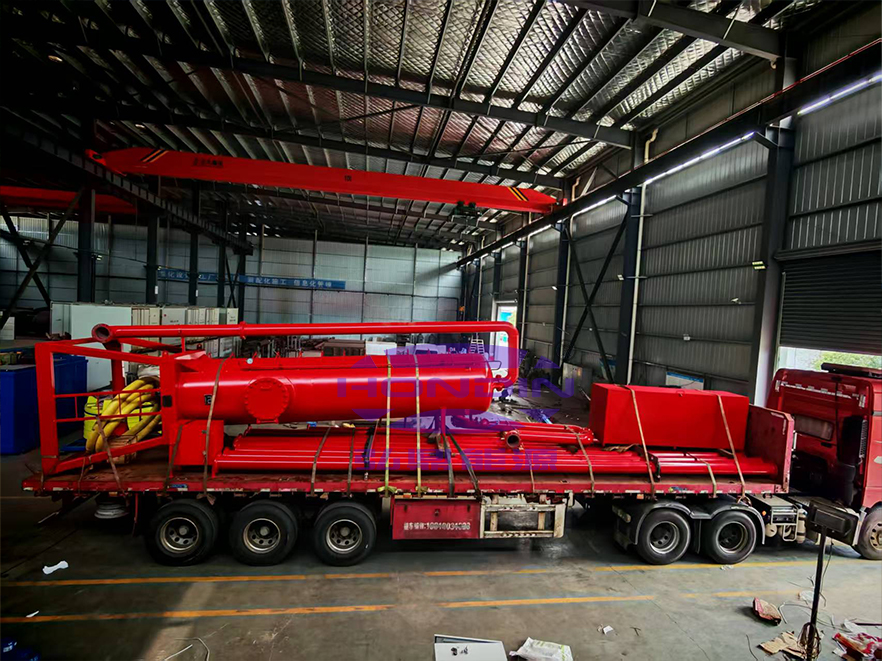
I. Core Value: Preventing and Controlling Well Control Risks and Eliminating Serious Safety Accidents.
Thousands of meters underground, the strata hold numerous unknowns. High-pressure oil and gas reservoirs are like dormant beasts. Natural gas and associated gas in the formations can return to the wellhead along with the drilling fluid. If not separated and discharged promptly, the following risks may occur:
1. Kick and Blowout Hazards: Gas bubbles form in the drilling fluid, significantly reducing its density (for every 1% increase in gas content, the density decreases by approximately 0.01 g/cm³), weakening the 'liquid column pressure' exerted by the drilling fluid on the bottomhole. Once the liquid column pressure falls below the formation pressure, formation fluids (oil, gas, and water) can surge into the wellbore, triggering a kick. If not promptly controlled, this can develop into a blowout, causing not only equipment damage but also casualties and ecological pollution.
2. Gas lock and reduced pump efficiency: When gas mixed with drilling fluid enters the drilling pump, it expands or compresses due to pressure fluctuations, causing a 'gas lock' phenomenon. This phenomenon prevents the pump from being filled with drilling fluid, resulting in a sudden drop in pump output or even failure to deliver the fluid properly, directly interrupting drilling operations.
A gas-liquid separator efficiently separates gas from drilling fluid using the principles of 'centrifugal separation + gravity settling.' Drilling fluid enters the separator chamber at high speed, forming a rotating vortex. Because the gas has a much lower density than the drilling fluid, the centrifugal force throws it toward the chamber walls and discharges it through an exhaust channel (which can be connected to a flare or recovery system). The degassed drilling fluid then flows back through the bottom outlet to the circulation tank, restoring normal density and output.
II. Process Assurance: Stabilizing Drilling Fluid Performance and Improving Drilling Efficiency.
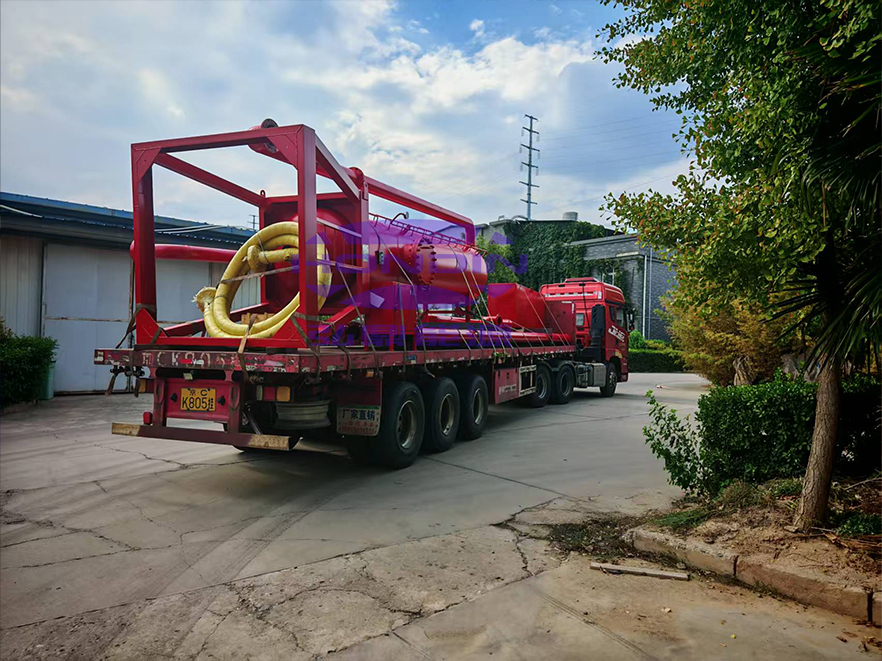
In addition to safety and control measures, the gas-liquid separator also maintains the rheological properties and functional stability of the drilling fluid through degassing, supporting drilling efficiency:
1. Preventing Drilling Fluid Performance Deterioration: Hydrogen sulfide (H₂S) in natural gas is an acidic gas. If it mixes with drilling fluid and is not promptly separated, it will react with the treatment agents (such as clay stabilizers and viscosity reducers) in the drilling fluid, rendering them ineffective and causing an abnormal increase in drilling fluid viscosity and a decrease in fluidity. H₂S can also corrode drilling equipment (such as drill pipe and drill bits), shortening its service life. The gas-liquid separator can quickly separate the sulfur-containing gas and, in conjunction with the desulfurization unit for further treatment, stabilize the pH value of the drilling fluid within the safe range of 8-9, preventing performance degradation and equipment corrosion.
2. Ensure stable drilling parameters: The density and viscosity of the degassed drilling fluid are uniform, and the drilling pump displacement can be stably controlled at the designed value (e.g., 30-50 L/s). This ensures that the drill bit receives consistent and uniform hydraulic power, avoiding problems such as 'bit balling' and 'incomplete wellbore cleaning' caused by displacement fluctuations.
3. Environmental Compliance: Control harmful gas emissions and reduce ecological pollution.
As environmental policies tighten emission requirements for drilling operations, gas-liquid separators play a key role in gas detoxification:
1. Reduce the spread of harmful gases: If drilling return gas contains harmful components such as H₂S and methane, direct discharge can cause air pollution. H₂S is a highly toxic gas that is extremely harmful to the respiratory and nervous systems of workers. Methane is a potent greenhouse gas, with a greenhouse effect 28 times that of CO₂.
The gas-liquid separator collects the separated gases and combusts them via a flare (H₂S burns to harmless SO₂ and H₂O) or connects them to a natural gas recovery system, avoiding the pollution and safety risks associated with direct discharge.
2. Preventing secondary contamination of drilling fluid: If the gases are not completely separated, bubbles remaining in the drilling fluid can burst within the circulation tank, carrying drilling fluid droplets with them as 'mist droplets.' Chemical treatment agents (such as polymers) in the fluid can spread to surrounding soil or water, potentially causing contamination. The degassing effect of the gas-liquid separator reduces the generation of mist droplets, and combined with the sealed cover of the circulation tank, further minimizes the risk of secondary contamination.

IV. Scenario Adaptability: Irreplaceable in Different Drilling Conditions.
Whether drilling conventionally onshore or offshore, or drilling horizontal or ultra-deep shale gas wells, the importance of a gas-liquid separator is irreplaceable and requires optimized configuration based on the operating conditions:
Drilling in high-pressure gas formations (such as shale gas and coalbed methane wells): A gas-liquid separator with a high-efficiency cyclonic flow and multi-stage separation is required to ensure rapid processing of high gas content (e.g., return gas exceeding 20%) and prevent gas accumulation.
Offshore drilling: Due to limited platform space, a skid-mounted, compact gas-liquid separator is required. It also features salt spray corrosion resistance and explosion-proof sealing to prevent gas leaks and accidents at sea.
Drilling sour wells requires a gas desulfurization unit and an H₂S online monitor. Gas separated by the gas-liquid separator undergoes a desulfurization treatment (such as alkaline absorption) and is then monitored to ensure H₂S concentrations are below 10 ppm (the occupational exposure limit) before being discharged or recovered.
Conclusion: Gas-liquid separators – essential safety equipment for drilling operations.
In drilling operations, while not directly involved in rock-breaking like drill bits and drilling pumps, gas-liquid separators serve as an invisible barrier safeguarding the safety of the entire operation chain. Their efficient degassing prevents serious accidents such as kicks and blowouts, stabilizes drilling fluid properties and drilling efficiency, and meets environmental compliance requirements. They are an indispensable core piece of equipment for modern drilling operations.
As drilling advances into deeper and more complex oil and gas formations, gas-liquid separators are evolving towards high separation efficiency, intelligent monitoring, and multi-gas compatibility, continuously supporting drilling safety and green development.
你的喜欢,就是我坚持写下去的能量器
YouArticle
已有0人推荐
Click:








文章推荐
Hot Cases
-

How a Drilling Mud Solids Control System Improves Mud Reuse
-
How an Oily Sludge Treatment System Improves Oilfield Waste Management
-
HONDIN Energy Slurry Mixers: High-efficiency slurry mixing solutions suitable for various working conditions
-
The successful delivery of hazardous waste containers helps customers achieve standardized temporary storage management of hazardous waste.
-
Reco Water quality deterioration, easy clogging, tight deadlines? This skid-mounted oilfield and fracturing flowback fluid treatment system is designed for complex operating conditions!
-
Why are engineering projects becoming increasingly reliant on mud solids control systems?
-
Environmentally friendly treatment of drilling waste – achieving full compliance with solid and liquid standards and resource reuse.
-
Exploration of Improvements to Drilling Mud Non-Drop Equipment
-
Core Advantages and Application Analysis of Coalbed Methane Well Solids Control Systems
-
Core equipment of mud-free system
-
Current Status and Improvement Measures of Drilling Fluid Solids Control Systems
-
Understanding the Mud-Free System in One Article





Add: No.462 Jinggao South Road, Gaoling District, Xi'an, Shaanxi Province, China
Mob/WhatsApp: +86 186 2931 2932/ +86 187 2900 8271
E-mail: sales@hondinchina.com

Follow us:

点击右上角
分享给朋友吧
点击右上角
分享给朋友吧
Copyright © Xi'an Hondin Energy Technology Co., Ltd. All rights reserved
Copyright © Xi'an Hondin Energy Technology Co., Ltd. All rights reserved